
You think the venue price is the price? Cute. After calling 100 places, here’s the scam: the “rental” is a glorified room key, the real bill is minimums, service fees, taxes, overtime, and, yes, a line item for plugging in a mic. Bar math gets sneaky, ceremony setups cost extra, and cake-cutting’s a toll. But you can claw money back—if you know where they hide it. Ready to flip the contract?
Key Takeaways
- Base venue rental equals timed access with limited inclusions; setup/cleanup windows tight; overtime costly; parking limited; insurance COI required.
- Minimums and fees: food-and-beverage floors, guest/drink minimums, hour minimums; falling short or overtime triggers premium charges and outside vendor/teardown fees.
- Food, bar, cake: packages steer choices; open bar $30–$60 pp/hr, beer/wine $18–$30; corkage $15–$40; cake-cutting $2–$8; signature cocktail fees apply.
- AV, power, and lighting add-ons add up: extra mics, uplights, dimmers, generators, fuel, delivery, and tech support; rehearsal testing recommended.
- Expect invoice multipliers: mandatory service charges, sales tax, possible gratuity; plus ceremony site, setup, room-flip, load-in, cutoff, and noise ordinance costs.
Base Venue Rental: What the Price Really Includes
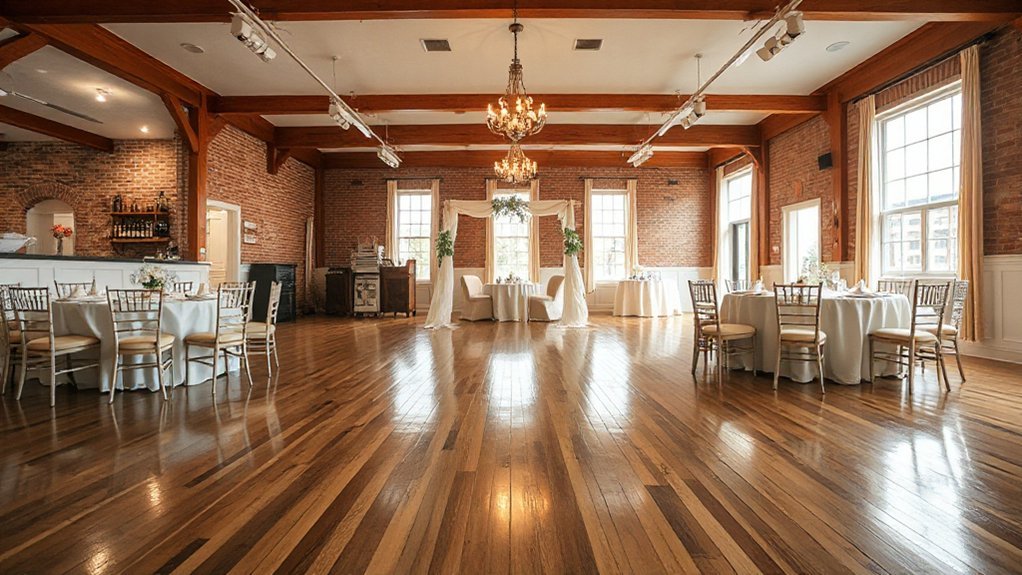
Although the brochure screams “dream venue,” the base rental is really a timed room key with a few extras, not a magic wand. You’re paying for hours on a calendar, walls, bathrooms, and usually a harried venue manager with a walkie. Maybe some tables, wobbly chairs, and a “getting ready” room with a heroic mirror. Setup window? Tight. Cleanup window? Tighter. Miss either, hello overtime fees. You’ll sign Insurance Requirements like you’re opening a trampoline park, then email a COI while stress-eating pretzels. Parking Capacity matters too—thirty spots isn’t “ample” when Aunt Linda arrives with cousins and coolers. Expect basic lighting, standard power, and a noise curfew. Security sometimes, janitorial sometimes. Everything else? It’s on you, captain. Budget buffers, spare hands, and realistic timelines.
Food & Beverage Minimums and Package Pricing
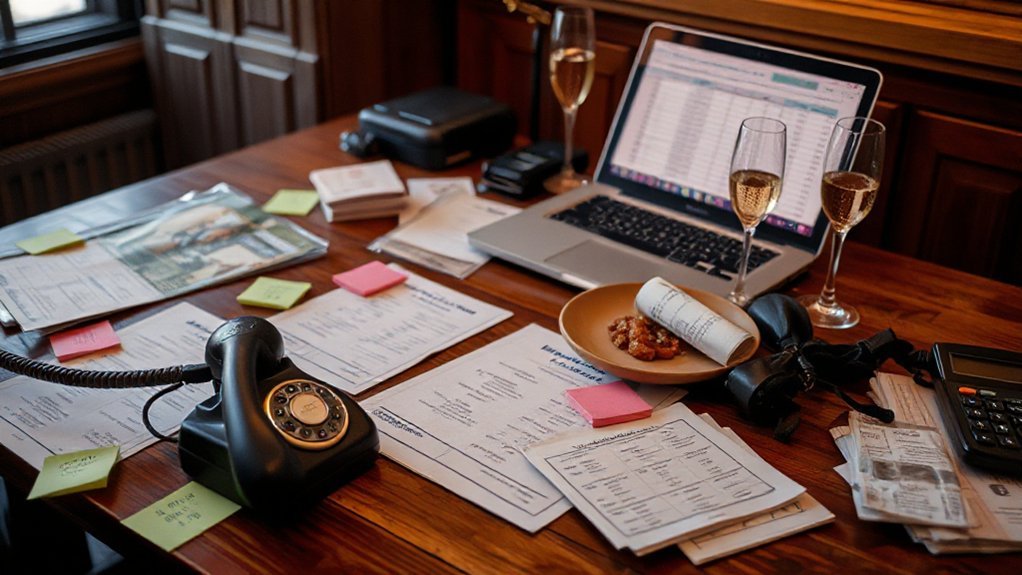
Because venues like to play “gotcha,” the food-and-beverage minimum isn’t a cap, it’s a floor—money you must spend, or you pay the difference for air. Translation: if the minimum is $15,000 and your choices total $14,200, congratulations, you’re buying extra bread. Packages sound friendly, but they steer you, hard. Ask what’s included, what’s swappable, and how portion sizing works for cocktail hour versus dinner. Chicken can be generous, steak mysteriously petite. Push for menu flexibility: can you mix stations and plated, add late-night fries, ditch the sad pasta? Confirm counts: kids, vendors, gluten-free cousins—do they hit the minimum? Watch bar tiers too; “premium” often means one good bourbon and regret. Want to save? Brunch wedding, smaller pours, smarter bites. Insist on a tasting first.
Service Charges, Gratuities, and Taxes Explained

You think the price covers the party, then the invoice coughs up “service charge,” “gratuity,” and mystery extras—so what’s included vs what’s sneakily added? Some fees are mandatory, the venue’s cut in a fancy hat, while real tips go to actual humans and, yes, you still decide the number. Tax rates change by city, county, and even venue type, so let’s clock the usual ranges and how a “cute” 10% swing can roast your budget.
What’s Included Vs Added
While the venue tour feels like a fairy tale, the invoice is where the dragons live. Start by separating what’s baked into the package from what gets bolted on. Included usually means room rental, tables, chairs, standard linens, basic AV, setup and teardown, maybe an on-site coordinator. Added means everything with asterisks: upgraded linens, specialty chairs, late-night moves, vendor power, extra hours, tasting beyond two bites, cake plating, coffee stations, valet, corkage. Then there are the quiet multipliers: service charge, sales tax, sometimes a separate gratuity line, all applied to more than you expect. You want Expectation Alignment? Get it in writing. Push for itemized proposals, then confirm again in Postbooking Communication. Ask, “Is this included?” until they flinch, smile, and answer. Be clear.
Mandatory Fees Vs Tips
Though it all sounds like Monopoly money at first, there’s a big difference between “mandatory” and “tip-jar optional.” Service charge? That’s not a tip; it’s the venue’s built-in fee for staffing, admin, sometimes “overhead,” sometimes “vibes.” You don’t get to negotiate it at the bar, you just pay it. Taxes? Also not a tip, just the government saying hi. Gratuity, though—that’s the thank-you money for people hustling: servers, bartenders, banquet captain. Some contracts list a set gratuity; others leave it to you. Read the fine print, underline verbs. If a fee is mandatory, it won’t change based on guest perception or etiquette norms. Tips will. Want goodwill and faster refills? Budget real gratuities. Want drama? Pretend the service charge covered it. It didn’t.
Tax Rates by Venue
Because taxes love a party more than your uncle does, the rate you pay depends on the venue’s zip code and what’s on the bill. City halls hit you with sales tax, county add-ons, sometimes tourism fees, because why not. Food and beverage get taxed; service charges usually do too; true gratuities sometimes don’t, if you keep them voluntary. Read the line items, then breathe. Historical Trends? Rates creep up after budget shortfalls, then plateau when voters howl. Policy Drivers? Bonds, stadiums, transit fixes—your bouquet helps pay for them. Ask the venue: what’s taxable, what’s not, and where’s the service charge going. Pro tip: compare quotes pre-tax, then apply local rates. Better yet, run worst-case math, save future-you a headache. That cushion buys peace.
Ceremony Sites, Setup Fees, and Room Flips

Even if the tour felt all‑inclusive, ceremony sites, setup fees, and room flips love hiding in the fine print. The “garden vow nook”? Cute, and somehow $1,200, plus chairs that multiply like rabbits. Need a mic, an arch, a rehearsal hour? Ka‑ching. Ask where guests land, because parking logistics turn into shuttle invoices fast. And check noise ordinances; your DJ can’t fight city hall at 9:59 p.m.
Setup fees are the sneaky cousin—paid for “labor,” “layout,” and “early access,” billed by the hour you don’t use. Rain plan? Another fee, naturally. Room flip sounds magical until they quote $10–$20 per guest to move furniture you already rented. Expect dead air, lukewarm appetizers, maybe a curtain. Want to skip it? Book two spaces. If possible.
Bar Options, Corkage, and Cake‑Cutting Fees

Before you toast, know the bar is where venues print money. “Open bar” sounds sexy till you see $30–$60 per person, per hour, plus 22% service, plus tax, plus your soul. You think cash bar saves you? Guests revolt. Cap it: two hours, then beer and wine. Signature Cocktails look cute, but prep fees bite. Ask what “premium” really means. Corkage runs $15–$40 per bottle. Cake‑cutting hits $2–$8 a slice. Bring your own cake? They’ll still charge. And sell Cake Garnishes. Read fine print, always get totals.
| Option | Charge | Gotcha |
|---|---|---|
| OpenBar | $30–$60 pp/hr | No shots, late fees |
| BeerWine | $18–$30 pp/hr | Warm kegs, brand limits |
| Corkage | $15–$40/bottle | Case limits, staff pours |
| Signatures | $2–$6 pp | Prep, glassware rentals |
| CakeCutting | $2–$8/slice | Plating fees, leftovers |
AV, Power, Lighting, and Generator Costs
You survived the bar math, congrats; now meet the silent wallet vampire: AV and power. Venues love bundling “basic sound,” which means one sad mic and a speaker that wheezes. Need ceremony plus reception coverage, extra mics, a mixer, monitors? Cha-ching. Lighting’s worse. Uplights, pinspots, dance-floor movers, dimmer control, the works—each line item taps your card like a hungry pigeon.
Here’s the trap: Power distribution. Old barns have two outlets and a dream; ballrooms hide surcharge menus. DJs, bands, photo booths, caterers—they all sip juice, then chug. Generators? Budget for a quiet inverter, fuel, delivery, and a tech, not Cousin Kyle. Add Battery backups for the officiant mic and router, because storms and drunk uncles happen. Test everything at rehearsal, then sleep slightly less.
Seasonality, Day‑of‑Week, and Time‑of‑Day Pricing
Because the calendar is a cash register, your date choice prints the receipt. Saturdays in June? Surge pricing with confetti. You’re competing with prom photos and peonies, plus the weather impact makes everyone bold, so venues raise rates. Midweek dates, though, suddenly you’re a bargain hunter in a candy aisle. Thursdays land 10–30% cheaper, same walls, same dance floor, fewer bragging rights. Morning ceremonies shave more, brunch weddings dodge bar costs and heat, and Grandma actually stays past cake. Off‑season matters, too. In snowy towns, January is crickets, prices soften. Beach markets hike when sunsets behave. It’s all local demand, not destiny. Ask for shoulder months—April, November, even weird Sundays. Want the deal? Flex the date, not your dreams. Vendors won’t argue with logic.
Minimums for Guest Count, Hours, and Vendor Policies
Though it’s your party, the venue runs it like a meter, and meters love minimums. You’ll see guest floors: pay for 120 even if 92 show. Drink minimums, too, because Aunt Linda can’t carry the bar alone. Hours? Most require five to six, with overtime billed like airport coffee. Noise ordinances kick you inside by 10, sometimes 9. And vendor lists—preferred, exclusive, or nothing—decide who feeds you and who plugs in the lights. Expect proof of liability insurance, plus extra fees for outside caterers and late teardown. Read, push back, get it in writing.
It’s your party, but venues meter everything—minimums, curfews, vendor lists, insurance—so read, push back, get it written.
- State the guest minimum, by headcount.
- Define load-in, cutoff, overtime math.
- Note DJ decibels, outdoor limits.
- Explain vendor list, approval, fees.
- List liability insurance names, deadlines, and required certificate format.
Inclusions vs. Add‑Ons by Venue Type
At hotels, you get glossy packages that look all‑inclusive until the “extras” line item taps your wallet—chair upgrades, late‑night bites, that bartender you thought came with the bar. Barns feel charming until you start DIY‑ing the add‑ons: restrooms, heaters, lighting, oh, and someone to wrangle hay bales so Aunt Linda doesn’t sue. Raw spaces? Minimal inclusions, maximum control, and you’re renting a beautiful box, then paying to put everything inside it, from forks to fire permits.
Hotels: Packages Vs Extras
While hotel ballrooms look like one-stop wedding machines, the real game is what’s baked into the package versus what sneaks in as an extra. You’ll get tables, chairs, linens, sure, but ask color, counts, and upgrade fees. Bar tiers hide math; corkage and cake cutting nibble. You’ll swear the AV cart is platinum. Suites might be comped, or “discounted,” cute. Leverage Loyalty Programs; points can buy breakfasts, late checkout. Brand Reputation helps; managers hate angry aunt reviews. Read the banquet order like a mortgage, scratch fluff. Ask for swaps, not freebies. Confirm the end time, or bleed overtime.
- Ceremony chairs included; setup extra.
- House centerpieces yes; candles, maybe.
- AV: one mic; second costs.
- Bar closes at ten; after-party extra.
- “Complimentary” tasting covers four guests.
Barns: DIY Add-On Costs
Because barns look rustic and cheap, you think you’re saving a fortune—until the invoice breeds like rabbits. The rental’s bare bones, charming, and sneaky. You’ll pay to bring in chairs, tables, linens, and a dance floor, plus lights that actually let Grandma see you kiss. Restrooms? Often trailers. Power? A generator, and the tech who babysits it. Heating or cooling? Surprise: an insulation upgrade, or a pile of propane. And yes, that “included decor” is one lonely hay bale.
Catering’s off-site, so you rent a prep tent, sinks, and extra trash service. Bar service needs licensed staff, ice, and those 500 cups you forgot. Parking attendants, shuttle, rain plan. Sound limits mean extra speakers, aimed. Suddenly, DIY means, you did it, line by line.
Raw Spaces: Minimal Inclusions
Barns nickel-and-dime you; raw spaces just hand you an echo and a bill. You’re renting emptiness, basically, and paying extra to make it not sad. Four walls, maybe a roof, definitely no chairs. You bring power, light, bathrooms, and every last fork. Sounds freeing, sure, until the generator dies during vows. Also, Insurance considerations hit fast: some sites want million‑dollar coverage and security guards. Permitting complexities? Oh yes. Noise curfews, fire exits, alcohol rules—pick your headache. Budget like a contractor, not a bride. Call the city. Twice.
- Site walk: measure power, load-in paths, emergency exits.
- Rentals: tenting, flooring, HVAC, restrooms, lighting.
- Vendors: caterer with off-grid kit; licensed bartenders.
- Contingency: rain, wind, mud; generator and backup.
- Hidden costs: parking, dumpsters, overtime, restroom service, cleaning attendants.
Negotiation Strategies and Sample Savings
How do you shave real money off a venue bill without turning into That Person? Start with Anchor Offers: you open low, politely, with receipts. “Friday in January, no chiavaris, bar cap at $6k.” Then set a Walkaway Point, and mean it. If they won’t budge, you thank them, you bounce.
Target soft spots. Waive corkage if you use their bartender. Swap the plated filet for family-style, drop rentals, keep linens. Ask for service fee cut from 24% to 20%. Off-peak date, morning ceremony, shorter bar. Bundle rehearsal hour, comp ceremony chairs, free setup flip.
Sample wins I saw: $1,200 off food minimum, $800 in fees erased, one extra hour comped ($500), corkage waived ($15 per bottle, do the math). Real cash, zero drama.
Conclusion
You’ve got this circus now, and yes, every napkin apparently needs its own mortgage. Read the fine print, bully the minimums, swap what you can, and book off‑peak like a thrift ninja. Ask dumb questions—I did, repeatedly, with heroic awkwardness. Cap hours, kill mystery fees, bless vendor approvals, and demand line items like it’s cross‑examination. If a proposal multiplies like gremlins, walk. Your budget isn’t a piñata, it’s armor. Swing first, smile sweetly, get receipts.






Leave a Comment