
Booking a wedding venue is like hiring a boss for your party, and yes, they will judge your playlist. You need a vibe, three must-haves, and a budget that doesn’t cry. Then you stalk dates, sniff out hidden fees, and demand policies in writing, because chaos loves fine print. We’ll hit capacity, curfews, power, photo spots, the whole circus—and the one question that makes sales managers blink.
Key Takeaways
- Define your vibe, must-haves, and hard no’s; map to venue light/ceilings/scenery/rules; shortlist 5–7 venues.
- Set a hard budget; request itemized pricing, minimums, overtime, taxes, service charges vs tips; add a 10% buffer.
- Confirm date availability, hold terms in writing, seasonality pricing, insurance requirements, curfew times, and local noise penalties.
- Verify capacities per segment, guest flow and seating, ADA access, parking/overflow, and load-in/out logistics with vendor counts and fire-code limits.
- On site visits, test staff, acoustics, and lighting; confirm vendor policies, rentals, power plans, weather contingencies, and photo locations.
Define Your Vision and Build a Shortlist

Before you tour a single ballroom, get clear on your vibe. Picture the day, not the Pinterest board explosion. Are you barefoot in a meadow, or strutting under chandeliers, smug as a cat? Define your personal style in plain words: moody candlelight, coastal breezes, city rooftop at sunset. Then chase inspiration sources that support it—albums from past weddings, music videos, your grandma’s backyard photos, even that diner neon you love.
Write three must-haves and three hard no’s. Indoors in July? Great, then skip barns with fans and hope. Want dogs, fire pits, late-night tacos? Put it in ink. Now build a shortlist, five to seven spots, tops. Map the vibe to the venue’s bones—light, ceilings, scenery, rules. Hesitate? Cut it. Heart jumps? Keep it.
Budget Planning and Pricing Breakdown

You picked your vibe and trimmed the list—great, now let’s talk money, the part where romance meets spreadsheets and your eyelid twitches. Start with a hard ceiling, then slice it: venue fee, food, booze, rentals, staffing, insurance, tips, sneaky extras. Ask what’s included—chairs, linens, setup, teardown—or if you’re paying à la carte for air. Read the contract like it owes you cash. Line-item pricing, minimums, corkage, overtime by the quarter hour.
Play with Payment Psychology: deposits feel fine until the third one hits. Map payment dates to paychecks. Build a 10% “oops” buffer. Now the Tax Considerations: service charges aren’t tips, and taxes stack on top of fees. Ask for an out-the-door total. Then compare apples to apples, not chandeliers to charm. Be ruthless.
Date Availability, Holds, and Seasonality

First, figure out if you’re chasing peak-season glory or off-peak sanity—June Saturdays cost champagne money; February Fridays, iced coffee change. Ask how long they’ll hold a date without a deposit, and what happens when your aunt’s “just checking flights” routine chews up the clock. And test their weekday vs weekend flexibility—could a Thursday sunset save thousands and thin the plus-ones, or are weekends the only game?
Peak Vs Off-Peak
While everyone dreams of a Saturday in June, the venues dream of your credit card. Peak season means prime weather, packed calendars, and prices that do push-ups. You’ll fight for sunsets, squeeze into photo spots, and nod politely when someone says, “We can fit you at noon.” Off-peak? Cheaper, calmer, sometimes colder, but your vendors actually breathe.
Ask blunt questions: What months spike? Which weekdays drop? How do staffing patterns change—full crew in August, skeleton crew in February? Are there community events that jack traffic, clog parking, or swallow hotel blocks? Picture grandma circling the block. Not cute.
Consider what you value: blossoms, bonfires, or blank space on the calendar. If flexibility saves thousands, brag about your chic Thursday in November. It’s rebellious, smart.
Tentative Holds Policy
How does a “tentative hold” actually work? Simple: you ask the venue to freeze a date while you wrangle parents, budgets, and that one cousin who “might be abroad.” Most venues pause the date for 5–14 days, no deposit, just your contact info and a promise to decide. Miss the deadline? It auto-releases, like Cinderella’s carriage, but with more emails.
You want receipts, not vibes. Ask for clear terms, Digital tracking of holds, and who gets notified when someone else tries to book your date. If they stumble, blame weak Staff training, not fate.
- Hold window: exact start/end times.
- What triggers release, including time zones.
- Deposit and contract steps to confirm.
- How tie-breakers and waitlists are handled.
Keep receipts handy.
Weekday Vs Weekend Flexibility
Because weekends are the prom queen, you’ll fight everyone for them—prime Saturdays book a year out, sometimes two, and holds evaporate faster than the champagne.
Ask venues how long they’ll hold a date without a deposit, and what happens at 5:01 p.m. when your hold expires.
Weekdays give you leverage, smoother calendars, rates, breathing room.
You’ll get Midweek intimacy, staff who aren’t sprinting, and vendors who actually say yes.
Plus, Brunch receptions on Fridays? Iconic, cheaper, done before sunset.
Guests moan now, thank you later.
Peak season? Weekends vanish; off-season? Everything’s suddenly friendly.
Ask for soft holds across two dates, build a decision deadline, and get it in writing.
And if Aunt Carol can’t do Thursday, fine—stream the vows, send cake, keep your sanity.
Capacity, Layout, and Guest Flow
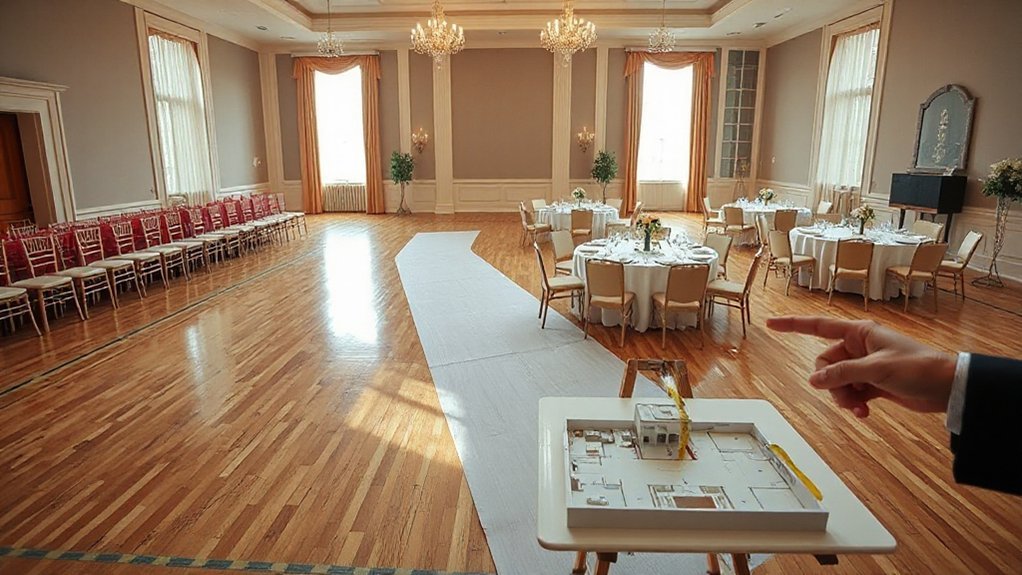
First, face the headcount truth: the venue either swallows your guest list or spits it back, so ask for hard caps, not fairy dust. Then picture bodies in motion—ceremony to cocktails to dinner—can folks sit, stand, mingle, and hit the bar without forming a tragic conga line by the bathrooms? You want chairs that don’t elbow tables, aisles wide enough for Aunt Linda’s sequins and your cake, and exits that don’t turn the bouquet toss into a stampede.
Guest Count Limits
Most venues look huge until you try to cram 187 of your favorite humans into them, plus Aunt Linda’s hoverboard purse. Ask the hard cap, not the hopeful cap. Fire code isn’t a suggestion; it’s a bouncer with a clipboard. Clarify whether the number includes vendors, kids, and that DJ’s hype man. Standing, plated dinner, cocktail-style—each changes the headcount math. Also, Plus One rules explode numbers fast, so set them early, and stick to them. Keep a tight list, then use Waitlist Management like a polite guillotine.
- Max capacity for ceremony, cocktail hour, reception
- What’s included in the count: staff, vendors, band
- Rain plan counts, if outdoors, no excuses
- Minimums and overage fees, in writing
Then breathe, because you’ve got this. Truly, calm swagger.
Seating and Traffic Flow
How do you keep 150 people from forming a conga line at the bar and a traffic jam at the bathroom? You plan the room like a theme park, minus the roller coasters. Start with capacity: round tables eat space, long tables squeeze more seats, cocktail rounds tempt chaos. Leave five feet between aisles, more near grandparents, less near your college friends, they bounce. Put bars opposite doors, split them in two, instant queue management. Bathrooms? Signage, lighting, no maze.
Guest sightlines matter. Don’t park a column in front of vows or first dance. Raise head table, tilt rows, spotlight mic. Keep the DJ beside, not behind, the dance floor. Create loops: ceremony to cocktail to dinner to exit, no dead ends, no bottlenecks.
Site Visit Checklist and Must-Ask Questions

Why tour a venue blind when you can roll in with a hit list and a healthy side-eye? Walk the space like a detective with cute shoes. Clock Staff professionalism at the door—do they greet you, guide you, actually listen? Clap, sing, whatever; test Acoustic quality so your vows don’t sound like a subway tunnel. Peek at lighting at noon and near dusk. Count outlets like they’re treasure. Bathrooms, spotless or scary?
Tour like a detective in cute shoes—test acoustics, lighting, outlets, and bathrooms.
- Ask to see getting-ready rooms, mirrors, outlets, daylight.
- Stand where the dance floor will be; check floor condition and sightlines.
- Walk guest routes, parking to chairs to cake, and note signage needs.
- Step outside: photo backdrops, shade, and a rain backup spot.
Take photos. Take nothing on faith.
Policies: Catering, Bar Service, Vendors, Insurance, and Curfews
Before you swoon over fairy lights, crack open the rulebook—this is where venues smile pretty and then invoice your soul. Ask who feeds people: in-house catering only, or can you bring Aunt Lina’s empanadas? Taste-test policy, minimums, cake-cutting fees, the sneaky stuff. Bar rules next: per-head packages, consumption tabs, or cash bar, and what happens if Uncle Ray orders top-shelf like it’s free water. Vendors? Watch for Vendor exclusivity; some spots make you use their florist, their DJ, their cousin. Insurance matters: demand the venue’s requirements, then snag event liability and liquor coverage, name them as additionally insured. Curfew penalties are real; know last-call time, music-off time, lights-on time, and the fine for one more chorus of “Mr. Brightside.” Ask about noise ordinances, too.
Logistics: Accessibility, Parking, Load-In/Out, and Rentals
While the photos scream “storybook,” the logistics whisper “traffic cone,” and that’s the voice you listen to. You need easy arrivals, quick exits, happy vendors. Start with accessibility. Grandma’s wheels don’t do stair marathons, so confirm ramps and elevator access, not “a strong cousin.” Parking? Ask for real numbers, overflow options, and who’s staffing it when guests all show up at 4:58. Now the unglamorous ballet: load-in and load-out. What doors, what hours, what dock, and how far to the ballroom? Rentals last. Chairs, bars, heaters, the whole circus—who delivers, who sets, who returns? Do route planning like a general before battle, then breathe now.
Pretty photos lie; logistics tell truth. Plan access, parking, docks, and rentals—or chaos will RSVP early.
- Map drop-off and ADA paths.
- Reserve vendor dock slots, badges.
- Lock setup/strike windows, share.
- Inventory rentals, tag boxes, assign.
Weather Backup Plans, Lighting, Power, and Photo Locations
You wrangled the load-in circus; now let’s keep the sky, switches, and scenery from punking you. Rain plan first. If clouds spit, where do guests sit, and who moves chairs? Ask about covered patios, tents, and portable shelters, not wishful thinking. Wind? Sidewalls, weights, tie-downs, done. Heat? Shade, fans, water, heroic ice.
Lighting, not a mood ring. Test dynamic lighting at sunset and after dark. Can the dimmers fade for toasts, then crank for dancing, without blinding Grandma? Bring your playlist, run a one-song rehearsal.
Power is not magic. Map outlets, circuits, and load limits. Separate band, kitchen, and lights, or you’ll DJ in silence.
Photos: scout golden-hour spots, rainy nooks, and clean backdrops. Avoid dumpsters, glowing EXIT signs, and surprise tractors in shots.
Contracts, Deposits, Hidden Fees, and Red Flags
Once the champagne daydream fades, the contract is where the venue shows its teeth.
Read every line, twice. Ask what the deposit covers, and when it vanishes. Nonrefundable isn’t a law of nature. Push back. Get payment dates, overtime rates, setup and teardown windows, in ink. Also, capacity matters; fire codes aren’t suggestions.
- Request a full fee sheet: service charges, admin fees, cake cutting, chair flips, corkage.
- Lock timing: access hours, vendor load-in, quiet time, power-down penalties, overtime per minute.
- Nail the Cancellation clauses, in plain English, with timelines and exactly who keeps what.
- Specify Dispute resolution: venue’s county or yours, mediation first, then arbitration, costs capped.
Spot red flags: verbal-only promises, blank spaces, “industry standard” shrugs. When they dodge, you bolt fast, now.
Conclusion
You’ve got the map, not a fairy godmother. Pick the vibe, lock the date, hunt the fine print like Sherlock, because pumpkins, curfews. Kick the walls, clap for echoes, count outlets, then count again. Ask for itemized everything, then add 10%, because Gatsby lied. Test route, the ramp, the rain plan. If a policy isn’t in writing, it isn’t real. Hold it, deposit it, celebrate it. If it smells off? Odysseus, tie in, sail on.






Leave a Comment