
In Austin, a Hill Country barn quoted $9k for a Saturday—before the bar, chairs, or the “generator fee.” You’re not crazy: venues swing from $8k room-only to $25k all-in, depending on zip code and ego. Peak season? Add pain. Weekday? Hello, savings. But here’s the twist—you can dodge surprise fees, squeeze value, and still get those golden-hour photos. Want the contract questions insiders ask, and the sneaky budget traps no one warns you about?
Key Takeaways
- Typical costs: venue space $8k–$15k; venue with food/bar $12k–$25k+, add a 10–15% cushion for inflation.
- Prices vary by location, season, day, guest count, and timeline; June Saturdays and city rooftops command premiums.
- Clarify inclusions versus rentals: chairs, linens, glassware, setup; expect extra charges for upgraded rentals, dance floor, lighting, stage, lounge.
- Avoid surprises: confirm vendor policies, corkage, overtime/noise penalties, service fees, and exact hours before signing; get everything in writing.
- Save smart: Friday/Sunday dates, photogenic venues, affordable menus, digital invites, thrifted decor, grocery flowers, preloved attire, and prioritized photo-visible details.
Average Wedding Venue Costs and Realistic Budget Ranges

Even if your Pinterest board swears you can rent a castle for pocket change, the average U.S. wedding venue will chew through a big slice of your budget—think roughly $8,000–$15,000 for the space alone, and $12,000–$25,000+ when food and bar are bundled. So what’s “normal” when you build a plan? Think budget tiers. Bare-bones halls and cozy community spaces, you might land near the low end. Mid-range estates and stylish lofts, you’ll hover in the middle. Full-service stunners with linens, staff, and real glassware, you’ll pay at the top. Add the inflation impact—prices creep, quotes expire, and last year’s deal ghosted you. Set a ceiling, stash a 10–15% cushion, get everything in writing, and stop doomscrolling ballrooms at 2 a.m. Go drink some water.
What Drives Price: Location, Season, Guest Count, and Timing
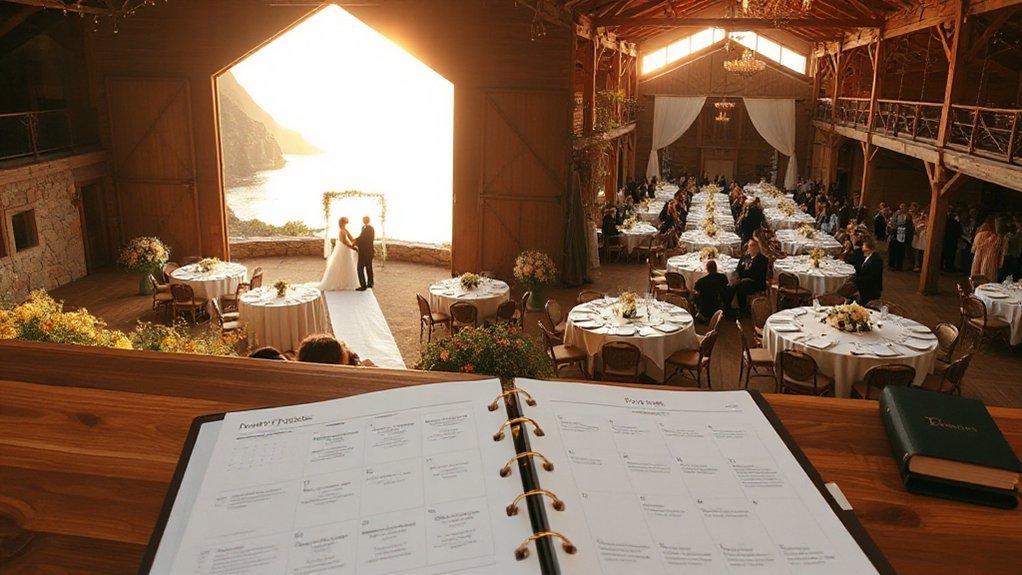
Sticker shock starts with location—city rooftop with skyline, cha-ching; barn an hour out, maybe your wallet breathes. Then the calendar smacks you: June Saturdays cost like concert tickets, while a Thursday in November? Practically a coupon. And guest count minimums lurk in the contract, so if you invite 80 but the venue’s minimum is 120, guess who’s paying for 40 invisible friends—you.
Location Premiums
Because geography plays bouncer at the door, location is the first thing that slaps your budget. City-center loft? You’re paying for skyline bragging rights, elevators, and parking that costs a small organ. Waterfront ranch or cliffside inn? Gorgeous, windy, expensive; deliveries and generators add dollars fast. Rural barns look cheap until you rent shuttles, restrooms, and lights, because cows don’t run power lines. Neighborhood rules matter, too. Zoning restrictions can limit music, tents, even where the bar sits, so venues bake compliance into the fee. Fancy mansion with a Heritage designation? Stunning, and pricier, thanks to preservation insurance and approved-vendor hoops. Want convenience? Pay for proximity to airports, hotels, Ubers. Want privacy? Pay for acreage, permits, and quiet neighbors. Either way, location taxes love.
Seasonal and Weekday Pricing
While summer Saturdays sound romantic, they also trigger surge pricing like your rideshare after a concert. Venues know demand, you know the bill. Peak months vary, but think May through October, plus any weekend with rain-free forecasts and smug sunsets. You want savings? Slide to Fridays, Sundays, or a bold Thursday. Same walls, smaller price, fewer calendar fights. Winter can be a steal, unless it’s New Year’s Eve, then forget it. Floral Seasons matter, too; spring blooms and fall foliage raise rates because photos sell dreams. Daylight Shifts push costs as well: long light equals longer timelines, more staff hours, bigger invoices. Morning ceremonies cut fees, and brunch keeps bartenders bored. Flex your date, ask for calendars, and negotiate like you mean it today.
Guest Count Minimums
How many people do you actually have to invite to gain access to the room? Venues love minimums, because empty chairs don’t pay the electric bill. If the minimum is 120 and you’ve got 85, guess what—you’re buying 35 ghost dinners. Sometimes they call it a food-and-beverage minimum, same wallet pain, different label. Planning intimate ceremonies? Ask for a smaller space, or a buyout discount, or both. And those plus one policies, sneaky. They can shove you over the line fast, especially with big friend groups and generous aunts.
Negotiate. Propose tiered pricing, promise a bar upgrade, or shift to brunch. Track RSVP attrition like a hawk. Seat maps lie; budgets don’t. When in doubt, cap invites early, and protect your per-person sanity today.
Comparing Venue Types: Barns, Ballrooms, Vineyards, and Rooftops

Why do barns, ballrooms, vineyards, and rooftops come with such wildly different price tags? Blame Architectural contrasts, plus Acoustic dynamics, and a few headaches you can’t see on Pinterest. Barns look rustic, sure, but they’re giant wooden echo chambers, often rural, with long drives, fickle weather, and pricey climate control. Ballrooms? Central, polished, staffed like a small army, sometimes union, always clockwork—convenience costs. Vineyards charge for the dream, for the view, for harvest calendars and strict noise curfews; you’re paying to whisper among grapes after 9 p.m. Rooftops flex altitude tax: elevators, wind plans, permits, insurance that screams “don’t drop the centerpiece.” Season spikes matter, Saturdays bite, city zip codes bite harder. Choose the vibe, accept the math, breathe. You’ve got this, budget boss.
What’s Typically Included Versus What You’ll Need to Rent
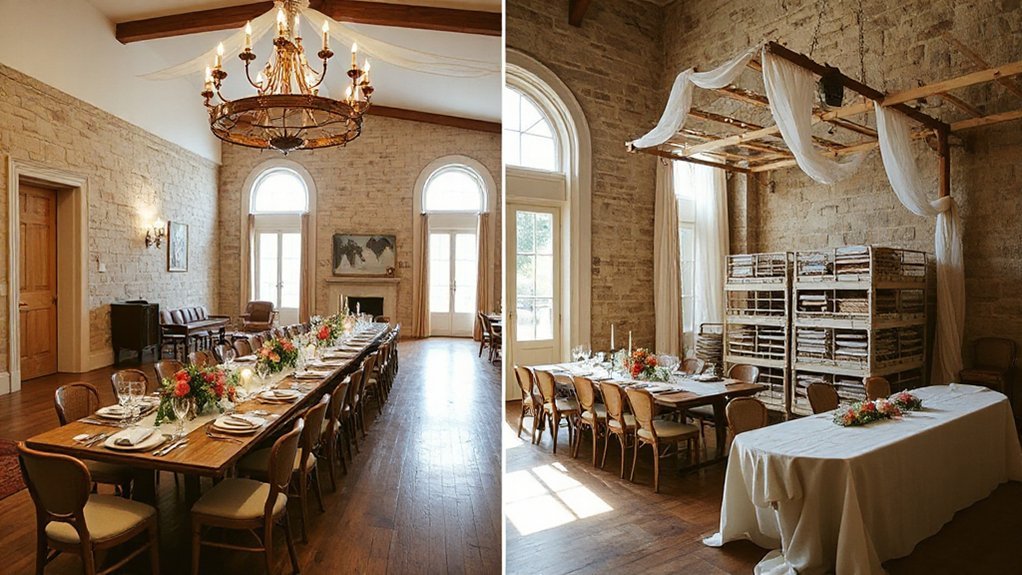
Because venues love fine print, you’ll get some basics and then a scavenger hunt. Most spots include the room, tables, standard chairs, a timid linens inventory, and house glassware. Sometimes staff handles setup and breakdown, bless them. You might get an on‑site coordinator and a catering nook with ice, nothing fancy. Sound? Maybe ceiling speakers for background, not dance music.
What you’ll rent: statement chairs, real barware, upgraded linens, chargers, and all the pretty nonsense you saved on Pinterest. Need a dance floor, a stage, or ceremony arch? That’s yours, too. Same with lounge furniture, heaters, or a tent if weather’s moody. Ask about lighting options—uplights, market strands, pinspots—because ambiance isn’t automatic. And yes, you’ll probably want microphones. Photo booth backdrops? Rent those, too.
Hidden Fees and Contract Terms to Watch Carefully

Watch for service and setup charges that sneak in like confetti, tiny line items that somehow cost as much as a DJ. Go past the fairy lights, look for overtime and noise penalties—yes, they’ll fine you because Aunt Linda won’t stop yelling “Sweet Caroline” at 10:01. And those vendor and corkage fees, the classics, pay extra to bring your own team and your own booze—because apparently your bottle needs a chaperone.
Service and Setup Charges
While the venue tour feels like a rom-com montage, the invoice is the plot twist that eats your lunch. Service and setup charges lurk in the fine print, grinning. You’ll see line items for chair flips, table resets, coat racks—yes, coat racks—and “Staging Logistics,” which is code for moving heavy stuff from Point A to Are-You-Kidding-Me. Ask who sets linens, who breaks down décor, and what “standard” includes. Spoiler: not your neon seating chart.
There’s also delivery doors, elevator time, and unions. If outside vendors touch a fork, you might pay a handling fee. Verify Insurance Requirements for you and every pro, or the venue adds a policy you didn’t budget. Confirm service percentages, minimum staffing hours, cake-cutting, corkage, valet setup, restroom attendants. Always.
Overtime and Noise Penalties
How late can you actually party before the venue turns into a pumpkin and hands you a bill with fangs? Ask for the cutoff, to the minute, and the overtime rate, per 15 or 30 minutes. Some spots charge double after midnight, cute, right? Check required quiet hours, because neighbor complaints trigger fines, security shakedowns, even early lights-out. Ask about soundproofing options, dance-floor placement, and decibel caps. Build a buffer: last song at 10:45, not 11. And nail who clocks the time, DJ, manager, or your frazzled cousin? Also, loading out late counts. Yep, silence costs, too. Tell your crew the rules, in plain English.
| Rule | Meaning | Ask |
|---|---|---|
| Cutoff Time | Exact hour music stops | Overtime rate, unit |
| Noise Limits | Decibel cap, hours | Monitoring, penalties |
Vendor and Corkage Fees
You survived the noise curfew; now meet the fees that sneak in wearing tuxedos. Vendors aren’t just people, they’re line items. Some venues charge “outside vendor” fees for your taco truck, florist, or DJ. Others push exclusive lists, plus a coordinator you didn’t ask for. Ask what’s included, what’s mandatory, and what detonates your budget if you refuse.
Corkage sounds cute, like a bottle in a bowtie. It isn’t. Respect corkage etiquette, or pay per bottle, per case, sometimes both. And liquor licensing? That’s the bouncer at the door. If the venue’s license throttles spirits, you’re stuck with beer and sarcasm. Before signing, get specifics:
- Exact vendor fees, by category, documented.
- Corkage rules, rates, and service specifics.
- Bar packages, staffing, liquor licensing limits, timing.
Smart Ways to Save Without Sacrificing Style
Kick things off by trimming the stuff no one remembers and doubling down on what actually shows up in photos. Candles beat chair sashes, every time. Choose a venue that’s pretty naked, brick walls, string lights, done. Hit Friday or Sunday, same vibe, softer bill. Feed people well, not endlessly, tacos and late-night fries steal hearts cheaper than filet. Skip custom invites, go digital, spend that on flowers. Or better, DIY Centerpieces with thrifted glass and grocery blooms, Martha will live. Wear Preloved Dresses, tailor them fierce, pocket the savings. Borrow a long veil, it photographs like money. Cut the guest list, add dance floor. Hire a rookie DJ with killer reviews, not a talk-show host. Finally, embrace daylight, it’s free lighting, for photos.
Essential Questions to Ask Before You Book
Why sign a venue contract blind? Ask the stuff that actually costs you, and the stuff that blows up if ignored. Start with capacity, hours, and what happens if Uncle Leo discovers the open bar. Then get into your non-negotiables: backup plan, lighting rules, and the dreaded “preferred vendors only” trap.
- What’s included, specifically: chairs, linens, setup, teardown, and who touches the cake knife when things get weird?
- Your people: Accessibility Requirements, parking flow, bathrooms, and a quiet spot for Grandma’s nap, plus Emergency Contacts on-site during the event.
- The money and the mess: payment schedule, overtime rates, corkage, security, insurance, and who handles cleanup when confetti meets red wine.
Do this now, not after the deposit. Future you sends cookies.
Conclusion
Pick the venue like Odysseus picked routes—watch the sirens: overtime, corkage, vendor traps. You know the numbers, $8–15k for space, $12–25k with grub, plus a 10–15% cushion. Choose off‑peak, Sunday afternoons, cozy guest list. Ask rude questions, smile anyway. Prioritize pretty backdrops, ditch twelve centerpieces no one remembers. Read every clause, initial the weird ones. Then book it, breathe, dance like Gatsby minus the tax fraud. It’s your party, not a budget horror film today.



Leave a Comment