
You want romance; venues want deposits. Before you tour, arm yourself, because nothing kills a vibe like surprise curfews, mystery fees, or a “backup plan” that’s a broom closet. You’ll ask about date holds, capacity, hours, load-in, rain options, overtime, noise rules, parking, Wi‑Fi—the grown‑up stuff no one posts on Instagram. Sounds boring? It’s the difference between smooth champagne and chaos confetti. Start here… then we get to the sneaky stuff.
Key Takeaways
- Are your preferred dates available, what holds exist, deposit amount/schedule, refundability, postponement rules, and any holiday/peak premiums?
- What is the true seated and cocktail capacity, posted fire code occupant load, egress compliance, and how décor or stages change permitted counts?
- What are rental hours, vendor load-in/out windows, storage options, staffing coverage, and who handles cleaning, trash, and linen after the event?
- What are overtime policies and rates for setup, event, teardown; exact noise curfew/decibel limits; enforcement, penalties, last call, and extension approval process?
- What payment methods are accepted, card/ACH fees, automated billing and reminders, who holds funds, cancellation timelines, and force majeure terms?
Is Our Preferred Date Available and What Holds Are in Place?

So, when exactly can you get married there—today, next fall, or never? Start with the calendar, not the cake. Ask if your exact date’s open, then poke at backups, because venues play Tetris with weekends. Press them on date flexibility: can you slide to Friday, or a Sunday with sunset vows, without losing perks? Now the spicy part—holds. Who’s got soft holds, how many, and what’s the hold duration before they vanish or harden? Get clarity on deposits, deadlines, and what triggers a release. Ask about waitlists, too, and how they notify—email, call, smoke signal? Demand specifics: blackout periods, holiday premiums, major events that choke parking. Take notes, screenshots, receipts. If they waffle, smile, then run. You’re booking, not guessing. Your timeline deserves certainty.
What Is the Guest Capacity for Seated Dinner and for Cocktail-Style?
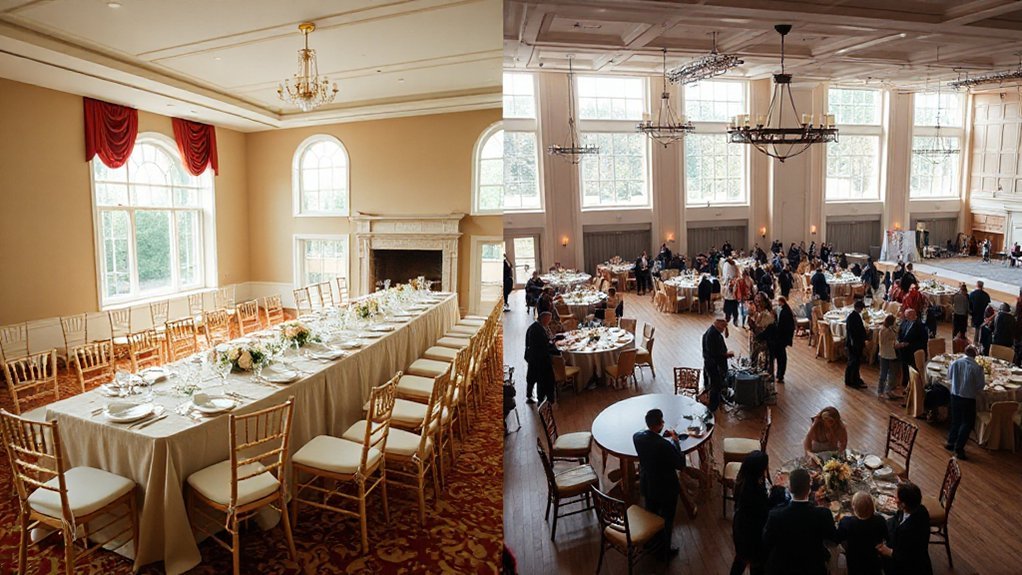
Start by getting two hard numbers: how many butts in chairs for a seated dinner, and how many happy roamers for cocktail-style, no guessing games. Then ask for the fire code maximum, and how it shrinks once you add a bar, a band, a cake table, and that ridiculous photo booth your cousin swears you need. Finally, demand floorplans with options—rounds, longs, lounge clusters, dance floor marked—so Aunt Linda isn’t exiled behind a pillar with the coat rack.
Seated Vs Cocktail Limits
How many humans can you pack in before it feels like a crowded elevator—seated and cocktail? Seated dinner eats space, no surprise. Tables, chairs, centerpieces, Aunt Joan’s purse fortress—boom, capacity drops. Cocktail style, you trade chairs for high-tops and motion, so the room holds more, usually. Ask for two numbers: realistic seated capacity with a dance floor, and cocktail capacity with bars and food stations set. Push for a layout, not a guess. Atmosphere Differences matter: seated feels formal, steady, toast-friendly; cocktail buzzes, flirty, louder. Guest Interaction changes too—more mingling, quicker conversations, less turf wars over chairs. Ask how servers flow, where bottlenecks hide, and what happens when rain forces everyone inside. Translation: comfort beats headcount. Happy guests stay longer, tip better, dance harder.
Fire Code Maximums
Why does the fire code get a vote at your wedding? Because sparks fly, candles wobble, Aunt Linda hoards shawls, and the city prefers everyone exits upright. Ask the venue for their posted occupant load, not a dreamy estimate. Seated dinner numbers drop fast—chairs, tables, centerpieces, your cousin’s giant stroller—so get the actual headcount for banquet setup and for cocktail-style. Then ask who calculated it, and when. If it’s Uncle Google, run.
Confirm permitted egress routes: how many doors, widths, kept clear even when the bar line gets feral. Fire marshal approvals? Sprinklers working? Capacity changes with décor, heaters, stages, more bodies per square foot. Over the limit equals fines, shutdowns, and you, explaining to Grandma in the parking lot. Not fun, trust me.
Floorplan and Layout Options
When the room fills, does anyone still breathe, or do chairs and centerpieces stage a coup? Ask how many bodies fit for seated dinner versus cocktail-style, not the brochure fantasy. Then push for floorplans. Rectangles eat headcount; rounds hog space; serpentine tables, weirdly efficient. Confirm sightline optimization so Grandma isn’t staring at a pillar while you kiss. Ask about flexible partitions; can they shrink rooms for small guest lists, or expand when your cousin brings plus-three? Demand real numbers: chairs, tables, dance floor, bars, buffet lines. Bonus points for diagramed traffic flow and coat-check locations.
| Setup | Ask/Numbers |
|---|---|
| Seated dinner | Max guests, table sizes, aisle width |
| Cocktail-style | Max guests, high-top ratio, flow paths |
| Dance floor | Square footage, location options |
| Flexible partitions | Sections open/closed, sound bleed |
How Many Hours Are Included in the Rental and What Are Access Times?

You need the clock math: how many total hours you actually get, from first key turn to last light off—no fairy godmother extensions at midnight. Ask when you and vendors can load in and out, setup window, teardown cutoff, because chairs don’t teleport and Uncle Lou’s photo booth eats time. And what happens if you run late—overtime rules, who approves it, and exactly how much they charge per 15 minutes, before you donate your honeymoon fund to the venue.
Total Rental Hours
How long do you actually get the keys? That’s the real headline. Ask for the total hours, spelled out, not wishful thinking. Does the clock start at arrival or at some mysterious “rental begins” moment? Clarify access times for you and guests. If it’s eight hours, is that noon to 8, or 3 to 11, or whatever the manager dreamed last Tuesday?
Now the sneaky stuff. Venues love fine print. Confirm what happens on holidays, during daylight savings, or if you’re crossing time zones for a destination bash. Is overtime possible, and what’s the per-hour sting? What parts of the property are open the whole time—suite, lawn, ballroom? Who holds the keys, literally or figuratively, and when do they appear, smiling, with a clipboard?
Setup and Teardown Windows
While the party is the headline, the real plot twist is setup and teardown—those unsexy hours that make or break your sanity. Ask exactly when doors are opened for you, vendors, and that aunt with twelve centerpieces. Is there a dedicated load-in lane, or a street fight with traffic cones? Clarify the setup window, the teardown window, and any required buffer. Can rentals arrive early, or only after staff clocks in? Day-before drop-offs allowed? Better: Overnight Storage with a lock and a label. Confirm power-on times, elevator access, and who handles trash, linens, and candle wax. Do they need the room broom-clean, museum-clean, or miracle-clean? Plan a quick Volunteer Briefing: who sets signage, who boxes florals, who checks for phones and jackets, after lights out.
Overtime Policies and Fees
So the last centerpiece is boxed and the broom’s done its lap—great, now ask what clock you’re actually living on. How many hours are baked into the rental, and when do you touch a key? Early load-in, or nope? Get exact access windows for vendors, party, and guests, not guesses. Overtime rates—by hour, half-hour, or dreaded minute? Who starts it, who ends it? Confirm staff breaks; labor laws matter, your party isn’t a loophole. Demand the fee ladder in writing, avoid billing disputes later. Also, curfew, parking gates, elevator shutoffs—the unsexy tyrants. Ask about grace periods, buffers, and who calls last song.
| Ask | Why it matters |
|---|---|
| Included hours | Controls schedule, budget |
| Overtime billing method | Stops surprise math at midnight |
| Curfew/enforcement | Saves fines, awkward shutoffs |
What Are the Noise Curfew and Event End-Time Policies?
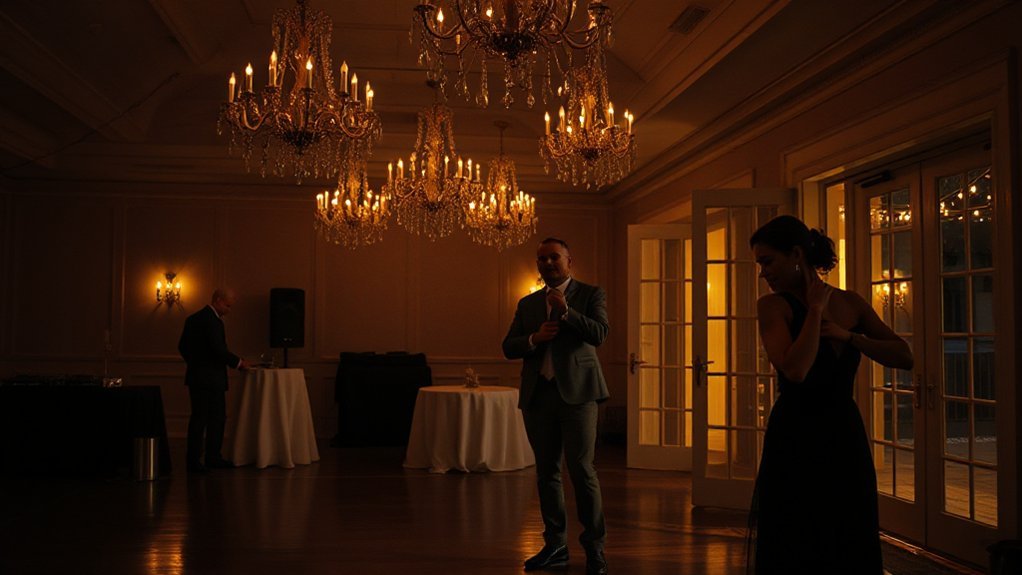
When do they pull the plug on your party? Ask for the exact noise curfew, the decibel limit, and the hard stop time. Not “around ten.” Exact. Who watches the clock, who tells the DJ to fade, and what are their Communication Protocols when the neighbors start clutching pearls? Find out if outdoor music shuts sooner than indoor. Ask when last call hits, when lighting must go up, when buses roll.
Also, consequences. Do fines show up like surprise confetti? Do they cut power, or just glare? Clarify cleanup buffer, load-out windows, and who handles the cranky cop. Push on Emergency Exceptions—city blackout, medical incident, wildfire sirens—can you pause, then resume? Get all of it in writing, initialed, stamped, tattooed. No surprises, just certainty.
Is There a Fully Indoor Weather Backup for Ceremony and Reception?
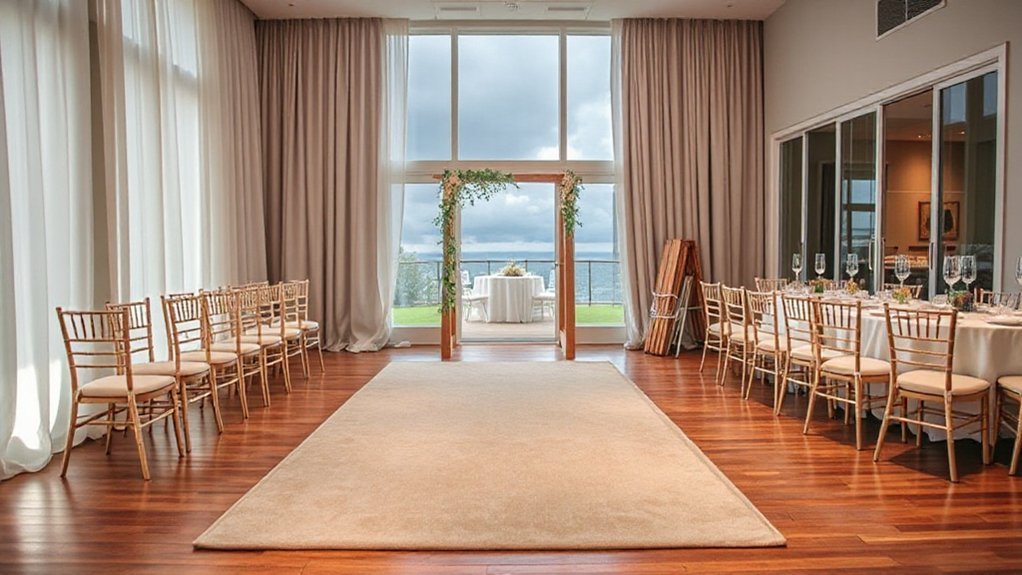
How bulletproof is their rain plan, truly? Ask if everything can move indoors, same time, same guest count, no sad overflow in a hallway. What’s the trigger call—radar at 10 a.m., or a panicked shrug at 4? Get specific about load-in routes, wet-floor hazards, and microphones that don’t fizz like soda. You want Aesthetic continuity, not “gym class under twinkle lights.” And yes, grills and candles—what’s allowed when wind turns feral? Finally, confirm Emergency access, generators, and bathrooms that don’t flood. Your dress deserves dry.
- Exact square footage for chairs, arbor, band, dance floor
- Timeline to enact the indoor plan, with named staff leads
- Rain gear: covered arrivals, valet, umbrellas, mop crew
If they flinch, smile, nod, and run for a drier option. Instead.
Are Ceremony and Reception Spaces Separate or Flipped in the Same Room?
Why does this matter more than cake flavor? Because where bodies move, feelings follow. Separate spaces give clean shifts, strong Emotional Flow, and that gasp-y grand reveal. Guests wander to cocktails, you breathe, vendors flip nothing. Easy. Flipped rooms? Possible, but you need tight Ceremony Choreography, a fast reset, and a DJ who herds cats. Chairs scraped, florals shuffled, Aunt Linda guarding her purse like Fort Knox.
Ask how long the flip takes, where guests wait, and who manages traffic. Is there storage for decor, or does it pile behind the band like a garage sale? Can the aisle become a dance floor without tripping over petals? Bonus: separate rooms protect timelines; flipped rooms stretch patience. Choose the chaos you’re willing to host today.
What Is the Rental Fee and What Exactly Does It Include?
Start by asking for the base price like you’re buying a used car—what’s the sticker, what dates change it, what hours you get before they shoo you out? Then pin down what’s actually onsite: chairs, tables, linens, sound, lights, parking, a human with keys—or is it just four walls and your tears? And for dessert, grill them on extras—service charges, cleanup, corkage, cake cutting, security, overtime—because surprise fees love weddings more than your Aunt Linda loves an open bar.
Base Price Breakdown
Before you picture your first dance under bistro lights, nail down the base price—what you pay just to walk through the door—and exactly what that buys. Ask for an itemized rental quote, not a dreamy ballpark. Separate flat rental from per-person stuff and upgrades. Map the cost drivers: day of week, season, hours on site, guest cap brackets, and demand spikes. Do quick market benchmarking, so Tuesday in February doesn’t cost like a Saturday in June. Audit the fine print: taxes, admin or service fees, cleaning, required insurance, security deposits, and overtime rates. If ceremony access or rehearsal time lives outside the base, flag it. You’re not being fussy. You’re protecting the cake budget.
- Written, itemized base-fee quote
- Rate calendar by date
- Defined surcharges
What’s Included Onsite
How much of your wedding actually shows up with the keys, and how much do you have to drag in a truck? Ask what the rental fee truly includes, line by line. Chairs, tables, linens, sure, but how many, and which colors. Ceremony chairs and an arch, or just a nice breeze. Getting‑ready suites stocked with mirrors, steamers, snacks. House sound system, mics, and basic dance lights, or your DJ hauls everything. Onsite coordinator day‑of, setup and teardown crew, or just a shrug and a broom. Kitchen for caterers, ice, and cold storage. Parking, signage, and bathrooms that don’t require a hike. Rain plan space you can actually use. Bonus points: Welcome baskets at check‑in, tours of Property artwork, and permission to photograph it.
Hidden or Extra Fees
Great, so they “include” chairs and a breeze—cute. Ask what the rental fee truly covers, line by line. Tables, linens, setup, teardown, security? Or is it just keys and vibes. Clarify hours, because overtime drains wallets fast. Ask about ceremony flip fees, cake cutting, corkage, and power for the DJ herd. I know, romance. Who runs payments, and are there processing fees for cards or ACH? Do they add an admin tax with a shiny bow? Confirm if “service charge” equals tips, or venue profit, and spell out gratuity expectations for staff.
- Exact inclusions and exclusions in writing, with unit counts.
- Every add-on with prices: corkage, heaters, generator, late flip.
- Payment schedule, refunds, processing fees, service vs gratuity, policies, timelines, penalties, receipts, who signs.
What Additional Taxes, Service Charges, and Mandatory Fees Apply?
While the base price might look friendly, the real fun begins with the sneaky add‑ons—taxes, service charges, and “mandatory” fees that multiply like rabbits. You’ll see sales tax, sure, but also venue “service” fees that aren’t tips, plus municipal assessments that sound like a parking ticket in a tux. Ask if catering, bar, rentals, and AV get taxed separately. Some resorts add transient occupancy or tourism surcharges even for day events—cute, right? Get percentages, bases, and due dates, in writing. Then ask what’s optional versus nonnegotiable. If a fee funds staff, confirm it’s not a gratuity. If it’s “administrative,” ask what admin you’re adopting. Read every line twice.
| Fee | Meaning | Hides |
|---|---|---|
| Sales tax | Tax | Proposal |
| Service charge | House fee | BEO |
| Tourism/assessment | Transient occupancy | Contract |
What Are the Overtime Rates for Setup, Event, and Teardown?
First, ask what they bill if your vendors need an extra hour before doors open—setup overtime pricing, per hour, half-hour, or some goofy flat fee. Then pin down event-hour overage fees: if the dance floor’s still hopping at 10:01, is there a grace period, a per-minute ding, or the full hour, no mercy. Finally, get their teardown overtime policies—do lights-on mean bouncers and fines, or can your crew wrap for 30 more minutes at a set rate without everyone getting the stink eye.
Setup Overtime Pricing
How much will the clock really cost you? Setup always eats time, cables tangle, florists wander, Uncle Lou parks in load-in. Ask the venue what an extra hour of setup costs, then what fifteen minutes costs, because vendors run late in real life. Push for billing transparency, not vibes. Do they use tiered pricing—first hour one price, every sliver after a steeper bite? And when does the meter start: dock, door, or ballroom?
- Clarify who can start setting up before the clock, and who triggers it.
- Get overtime rates for setup and teardown in writing, with timestamps.
- Confirm who’s allowed to approve extra time, you or any panicked planner.
Plan buffers, pay less, and skip the hallway haggling. Your budget will actually breathe, promise.
Event-Hour Overage Fees
When exactly does the party turn into a taximeter, and who’s holding the stopwatch? Ask the venue to define the minute the clock starts for setup, the hosted hours, and the last song. Per hour or per 15 minutes? Flat fee after midnight, or premium pricing when Uncle Joe orders one more round? Get fee transparency in writing, with numbers, not vibes.
Then push. Use simple negotiation strategies: bundle hours, shift start time, trim cocktail hour, trade décor access for a lower event rate. If staff, security, and bar charge separate overage, list each line, no surprises. What’s the rate for setup spillover, the event itself, and teardown time, if priced differently? And who’s authorized to extend, on-site, without calling a board meeting? Tonight.
Teardown Overtime Policies
Why does teardown time cost like surge pricing after a thunderstorm? Because once the music dies, the meter screams. Ask the venue for separate overtime rates: setup, event, and teardown—different crews, different pain. Is teardown billed per quarter-hour, or do they round up like airport coffee? Who approves extensions at 10:58 p.m., you or a ghost manager? Get load-out windows in writing, plus penalties for late vendor pickups. Tie in cleanup expectations, waste diversion goals, and who eats costs for extra dumpsters. When you negotiate, hit the big three:
- Setup overtime: early access, staging, lighting tests—priced unclear.
- Event-hour overtime: music off time, last call, bill spikes.
- Teardown overtime: who’s on clock, crew minimums, midnight reset fee.
Then run a quick post event survey, adjust.
What Is the Payment Schedule and Required Deposit?
Where does your money go, exactly? Start with the deposit, the cover charge for joining the party. Ask the amount, flat fee or percentage, and when it’s due. Thirty percent today, the rest sixty days out? Or a neat monthly cadence? Get dates, not vibes. Next, the schedule: milestone payments tied to menu picks, guest counts, walkthroughs. Who holds the money—venue, planner, some vault troll? Ask about Payment Methods: card, ACH, check, carrier pigeon. Cards add fees, checks bounce, ACH naps over weekends. If they offer Automated Billing, great, but verify reminders, receipts, and how to update a dying credit card. Late fees? Grace periods? Also, when does the final payment hit—before rehearsal, or the morning you’re wrangling boutonnieres? Put it all in writing.
What Are the Cancellation and Postponement Terms and Fees?
You nailed the payment plan; now ask what it costs to change your mind. Cancellation sounds cold, but it’s your wallet’s bodyguard. Ask when fees kick in, day one or 90 days out. Is any deposit refundable? Partial credit? Get the ugly numbers in writing, not whispered at midnight by a spreadsheet. Postponing? Different beast. You want a clear reschedule window, any change fees, and how pricing rolls to a new date. Peak Saturdays double as unicorns, so expect premiums. Also, define force majeure, not just “acts of whatever,” and what proof they want. If they shrug, walk. Clarity now saves tears, later, and credit cards.
Cancellation isn’t cold—it’s your wallet’s bodyguard. Get fees, refunds, and reschedule rules in writing.
- Timeline: deadlines, refund tiers, blackout dates.
- Postponement math: transfer credits, new minimums.
- Paper trail: amendment fees, manager sign-off.
Do You Require Event Insurance, and What Coverage Limits Are Needed?
Ask if they require event insurance, and how big the limits need to be—$1M? $2M?—because your cousin’s karaoke isn’t exactly OSHA-approved. Get the exact required coverage limits in writing, including host liquor liability if you’re pouring, so you’re not guessing while comparing quotes at 1 a.m., in sweatpants. Confirm whether they want a Certificate of Insurance naming the venue as additional insured, who it must list, and when it’s due, or watch your booking wobble like Aunt Linda’s Jell-O mold.
Required Coverage Limits
How much coverage do they actually want, and yes, that’s a real question, not a vibe check. Ask for numbers: general liability per occurrence, aggregate, liquor liability if Aunt Linda loves margaritas. Push for clarity on catastrophic exclusions, because fireworks, dance floors, and Uncle Pete’s breakdancing aren’t always “acts of God.” Confirm whether participant waivers reduce limits or just calm nerves. And don’t forget the deductible; a $1M limit with a $25k bite hurts.
- Minimum limit per incident, in dollars, not vibes.
- Separate liquor liability, if alcohol’s served.
- Property damage and medical payments, spelled out.
Pressure-test their examples: slip on spilled champagne, DJ trips a breaker, sparkler lights a table runner. Do those scenarios fit the limits, or your budget cries? Then pick coverage.
Certificate of Insurance
Why the fuss over a Certificate of Insurance? Because venues are allergic to risk, and you’re bringing 120 people, open flames, and Aunt Linda’s salsa dip. Ask the venue if they require event insurance, and what coverage limits they want on the COI—general liability, liquor, property damage. Get it in writing, with them listed as additional insured. Ask about deadlines, who sends it, and how they verify it. Check policy expiration dates like a hawk; nothing’s sadder than a void policy on wedding week. Confirm the carrier’s AM Best rating, yes, be that person. Also, learn the claims procedure: who you call, what photos you need, how fast you must report. Bonus: ask about vendor COIs too. Herd cats early. Save receipts, breathe, later.
Do You Allow Outside Vendors or Is There an Exclusive/Preferred List?
Before you picture the confetti cannon and your grandma dancing to Beyoncé, figure out if this place lets your people in or forces you to use theirs. Ask if outside vendors are welcome, or if you’re stuck with a “preferred” roster. Translation: your DJ gets benched unless they paid.
Dig into the why. Are there quality standards, or just referral incentives and quiet commission structures? What happens if your florist isn’t on the list—extra fee, or hard no? Get rules in writing, plus deadlines for names, licenses, arrival times. Then verify the vibe: will staff cooperate with newcomers, or stonewall them on power, load-in, and basic respect?
- Clarify penalties and add-on fees.
- Confirm blackout dates and noise limits.
- Ask how enforcement works, with examples.
Are There Catering Options On-Site, and Is Outside Catering Permitted?
So, where’s the food coming from—your venue’s kitchen, or your cousin’s taco wizard in a truck? Ask if the venue has in-house catering, and if it’s required. Some spots are strict, like grandma with her secret pie, others allow approved outside caterers. Pin down whether they support local sourcing and seasonal menus, or if everything tastes like January. Can you do tastings, pick service style—plated, family-style, stations—and mix cuisines? If outside vendors are allowed, confirm licenses, insurance, and any coordinator oversight. Fees matter: kitchen buyout, vendor surcharge, cake-cutting, corkage, late-night snack minimums. Dietary needs—gluten-free, vegan aunt, halal cousin—can they nail it without shrugging? Also, ask about bar packages and who runs them. Clarity now saves drama later. Your guests’ bellies will thank you, big-time.
What Kitchen Facilities and Equipment Are Available for Caterers?
First, ask if you actually get into the on‑site kitchen or if it’s a “look but don’t touch” museum, and when—load‑in at noon or at sunrise with the raccoons. Then grill them on gear: commercial ovens, enough burners, hot boxes, a real fridge, freezer, ice machine, prep tables, and that magical high‑temp dishwasher that saves your caterer’s soul. No kitchen access or just a sad warming closet? Cool, then you’re paying for rented equipment and a prayer.
On-Site Kitchen Access
How’s the kitchen, really—an actual working space or a sad closet with a microwave and dreams? You need to know how and when your caterer gets in. Ask for the access protocol, in writing. Who opens the door, who locks it, and what happens when Aunt Linda “helps” and trips the alarm? Get the keyholder contact, not just a front desk email. Clarify hours, early load-in, and late cleanout. Loading dock and freight elevator details, plus parking that isn’t three zip codes away. Where can hot boxes and ice live without getting booted by security? And insurance—do they need certificates taped to foreheads?
- Entry route and signage, clearly posted.
- Badges or door codes, who escorts vendors, please.
- Trash path, cleanup rules, fines for misses.
Equipment and Appliances Provided
Where’s the real kitchen muscle—ovens that hold temp, or a sad toaster pretending to be useful? Ask what’s actually on the line: convection ovens, combi, six-burner ranges, flat-top, hot box, ice machine, even a decent dishwasher. Get model numbers. Your caterer will bless you. Confirm gas or electric, amperage, and clearances, because tripping breakers mid-service is a horror film. Check refrigeration: walk-in, reach-ins, backup space, and whether they keep it locked. Smallwares matter too—sheet pans, cambros, hotel pans, speed racks, ladles, thermometers. Are Manuals provided, and is there Warranty coverage that still applies? Who resets temperamental ovens, you or a ghost? Ask about cleaning schedules, hood inspections, fire suppression, and grease trap rules. Last thing—spare propane, extra ice, and a plan B. Always handy.
What Are Your Alcohol Policies and Bar Package Options?
Why does the bar matter so much? Because nothing derails a dance floor faster than warm prosecco and a bartender who vanished at bouquet toss. Ask what bar packages they offer: per-person hourly, consumption-based, or cash bar. Clarify what’s included—premium vs well, beer and wine tiers, champagne toast, mocktails. Push on signature cocktails: can you test recipes, batch them, garnish like you mean it? Confirm age verification methods, scanners or eyeballing with a shrug. Also, house rules: last call time, shots or no shots, cut-off policy for overserved guests, required security, and proof of liquor license and insurance. And glassware—real, plastic, or the dreaded floppy cup.
- Ask about bartender-to-guest ratio.
- Confirm mixer/ice replenishment.
- Nail down last-call timing.
You want delight, not drips. Plan smart.
Do You Allow BYO Alcohol, and Are Corkage or Staffing Fees Charged?
When a venue says “BYO,” do they mean a Costco pallet or a couple bottles in your purse? Ask what “bring your own” actually covers—beer, wine, spirits, mixers, or just Aunt Linda’s famous limoncello. Then get blunt about money. Is there corkage per bottle, per case, or per guest, and does it differ for magnums? Any staffing fees for bartenders, ice wranglers, glassware washers, security? You don’t want surprise line items moonwalking onto your invoice.
Clarify delivery and storage provision—where your booze lands, who signs for it, and how cold it stays. Ask about insurance requirements and licenses for outside bartenders, plus signage requirements for responsible service. Who handles cleanup, empties, and recycling deposits? Finally, nail down timelines for vendor access and drop-off. Details.
When Is Last Call, and Are Shots or Kegs Restricted?
Ask the venue what time last call actually hits, not the “maybe around then” fantasy your cousin repeats, and whether bartenders cut off service 15 minutes early. Then press them on shots—banned, only with seated dinner, or capped after 9—because Uncle Ray and tequila are a known hazard. Kegs too: allowed, only pony kegs, or a hard no because foam, spills, and chaos?
Venue Last Call Time
So, how late can the party actually run before the lights snap on and the DJ gets the boot? Ask the venue for the literal minute last call hits, the bar goes dark, and the music cuts. City curfew? Venue’s own bedtime? Both matter. Build a 15–20 minute buffer, save yourself panic hugs. Clarify who makes the last-call announcement and how. Your announcement strategy should be consistent: a quick mic cue, a gentle light raise, maybe cheeky guest signage by the bar that says “Final round, heroes.” Also ask what time vendors must be out, not just guests. Overtime fees love surprises. Confirm it in writing.
- Exact last-call timestamp and music-off time
- Cleanup/out-by deadline and who handles glassware
- Transportation cutoff and when valets bounce
Shots and Keg Policies
Why do venues love champagne but fear tequila? Because bubbles behave, shots don’t. Ask straight up: are shots allowed, or only beer, wine, and “gentle” cocktails? Some venues nix shots after dinner, or ban doubles, because Uncle Rick plus Jäger equals police lights. Confirm last call timing too; is it a hard cutoff or a soft wink? For kegs, get nerdy. Tap compatibility matters—do they use Sankey D, or some hip import you’ll chase across town? Ask who provides the coupler, lines, and CO2. Demand Temperature control details: cold box, jockey box, or a sad bathtub of ice? Clarify glassware versus plastic, and if foam waste counts against your package. Finally, who pours—bartender, caterer, or your cousin? Choose wisely. No surprises, just happy toasts.
Are Vendor Meals Required, and How Are They Priced?
How many mouths do you actually have to feed—yours, guests, and the people keeping the chaos cute? Ask if vendor meals are required, and who counts: photographer, DJ, planner, second shooters, yes, even the drummer cousin. Clarify pricing: full entrée, discounted plate, or boxed sandwich that makes grown adults cry. Confirm Dietary accommodations and allergies apply to vendors too. Nail Meal timing, because a photographer eating during toasts is a priceless photo you won’t want.
Boxed sandwiches make grown adults cry; feed vendors early, hot, and thoughtfully.
- Who needs feeding, exactly, and how many staff per team?
- What’s the per-head cost, service fees, and taxes for vendor plates?
- Hot meal, cold meal, or buffet access, and where do they sit?
Get it in writing. No surprises, no hangry pros. Tip: feed them before guests. Promise. Seriously.
What Rentals Are Included (Tables, Chairs, Linens, Flatware, Glassware)?
Start by asking for the full inventory list—tables, chairs, linens, flatware, glassware—the whole glamorous pile, because guessing games are cute until someone’s short a fork. Then press for quantities and sizes, like how many 60-inch rounds, how many banquet tables, how many actual adult-height chairs, not the wobbly cousins. Finally, nail down who handles setup, breakdown, and cleaning, because you don’t want Aunt Linda folding chairs in her heels at 11 p.m., trust me.
Included Inventory List
When a venue says “tables and chairs included,” your wallet cheers, but your brain should squint. Ask for an actual Included Inventory List, not a vague promise. You want the item names, the styles, the materials, the finishes, and what’s considered standard. Note what’s standard versus an upcharge, because surprise invoices are not romantic. Check condition: stains, wobbles, chips. Request photos, or better, samples on site. Confirm who sets, flips, and washes. Ask about Inventory Tracking, so missing forks aren’t blamed on Aunt Rita. Read the Replacement Policy, line by line, before a “lost” cake stand becomes your mortgage. Finally, clarify delivery windows, storage access, and vendor use.
- Ask for a dated list.
- Note condition, cleaning, setup duties clearly.
- Get fees, damages, in writing.
Quantities and Sizes
Every number matters, and the inches matter more. Ask how many tables, which sizes—60-inch rounds, 72s, or skinny banquets that make elbows feud. Chairs, too—how many, what width, and do they squeak like gym bleachers? Linens: exact counts, drop lengths, colors that aren’t “eggshell-ish.” Napkins, real numbers, not “plenty.” Flatware—place settings per guest, plus extras for the cousin who hoards forks. Glassware: water, wine, champagne, rocks, quantities per person, and actual ounce sizes.
Now match it to your design. Centerpiece heights need clearance under chandeliers, and low blooms need room around bread plates. Check charger diameters against table size, so knuckles aren’t fencing. Confirm bar glass counts against signature-drink dreams. Oh, and bouquet quantities? Your toss bouquet doesn’t drink champagne. Ask for proof, specs.
Setup, Breakdown, Cleaning
How does all this pretty stuff actually get out of trucks and onto tables—and who cleans the glitter out of the carpet after your aunt discovers confetti? Ask the venue what rentals are included: tables, chairs, linens, flatware, glassware. Now dig: who unloads, sets, steams, flips, and when. Do they place settings or drop crates and vanish? Who moves ceremony chairs to reception, and how long? Clarify breakdown: staff or your cousins, and is volunteer training provided. Cleaning, too: who handles trash, mopping, bathrooms, and eco cleanup. Confirm delivery windows, staging space, rain plan, and overtime. Get it in writing; memory lies, invoices don’t.
- Exact setup/start times, vendor access, load-in path.
- Bussing tubs, trash liners, carts, glassware washing.
- Damage deposit, confetti policy, standard cleaning.
What Are the Quantities, Sizes, and Styles of Included Inventory?
Why obsess over the venue’s stash of stuff? Because your guests sit on it, eat off it, and stare at it all night. Ask for hard numbers: how many chairs, which style, any wobblers? Table sizes—60‑inch rounds, 72s, rectangles, farm tables—what’s actually included, and how many. Linens too: colors, lengths, floor‑length or awkward ankle grazers. Glassware, plates, flatware, candle holders—matchy or charmingly “eclectic”? Confirm condition and backups. Request photos and a Sample Delivery or swatch pickup, so you can see the real, not the brochure. Ask about Swap Options and upgrade fees, plus delivery timing, pull sheets, and who counts items back in. Need highchairs, a coat rack, an extra bar? Get it in writing, with quantities, dimensions, and prices. No surprises, only receipts.
Is a Dance Floor, Staging, or Risers Available On-Site?
When the DJ drops your banger, where do people actually dance? Ask if the venue has a built-in floor, portable panels, or nothing but hope. What size can they set, and where does it fit without exiling grandma to Siberia? Ask about the surface finish—slick like a bowling lane, or grippy enough for aunties in wedges. Check subfloor construction; bouncy is fun, ankle-twisting is not. Who installs, who moves tables, who cleans the confetti? And staging or risers—do they exist, and can they hold a band without trembling? Get weight limits, dimensions, delivery windows. You hate surprises, except cake.
Dance floor reality check: size, grip, subfloor, staging, and who handles cleanup—no surprises, just cake.
- Exact dimensions and max capacity per configuration.
- Weight ratings for staging/risers and anti-slip edging.
- Required footwear rules and floor protection for heels, heel caps recommended.
What Lighting and AV Equipment Are AVailable, and Are There Usage Fees?
Ask what in-house lighting they actually have—uplights, spotlights, dimmers, color washes—because “romantic ambiance” can mean anything from candlelit glow to airport runway. Then hit the AV list: mics, speakers, projector, screens, and who runs the board when Uncle Joe taps it like a vending machine. Now the fun part—fees—what’s included, what’s extra, plus setup, tech, overtime, and those sneaky “power drop” charges that show up like uninvited cousins.
In-House Lighting Options
How much glow can this place actually give you, and what’ll it cost when someone flips a switch?
Ask what’s built in: chandeliers, dimmable cans, uplights, pin spots, candles allowed, the whole sparkle buffet. Demand a demo, not a brochure—bad color rendering makes skin look like oatmeal. On site tonight. Check dimmers: smooth fade or flicker city? Ask about zones, so dinner’s cozy while the dance floor blazes. What bulbs—LEDs or power hogs? LEDs win for energy efficiency, cooler rooms, fewer blown circuits. Request gel colors or programmable scenes. And yes, clarify usage fees for in-house lights, plus any mandatory tech.
- See it at night, not noon; daylight lies.
- Walk the room, test cues: aisle, toast, first dance.
- Bring your photographer; they’ll spot shadows.
AV Equipment Rental Fees
So, what AV toys do they actually own, and what’ll it cost you to turn them on? Ask for a gear list, not vague vibes: mics, stands, powered speakers, subwoofers, ceremony PA, uplights, pin spots, gobo projector, podium, confidence monitor, HDMI switcher, even spare cables. Then the money: per-item rental, flat AV package, or hourly tech? Hidden fees for setup, strike, rehearsal, overtime, or “power drops”? Who runs the board—your DJ, their in-house guru, or your cousin with a YouTube degree?
Get rates in writing, line by line. That’s contract negotiation, not you being “difficult.” Use it for budget forecasting, too. Compare in-house versus outside vendor. Check insurance, damage deposits, and failure plans. Last thing you need—silence during the first dance. That kills vibes.
Are There Sound Restrictions or Decibel Limits for Amplified Music?
Why does your DJ need a science lab? Because venues love numbers, and the dance floor depends on them. Ask for their decibel thresholds, written down, not whispered. Do they meter sound at the mixer, the door, or the property line? Big difference. Clarify indoor vs. patio limits, and any time-of-night curfew. Penalties, too—warnings, fines, power cut? You deserve the full picture, before Aunt Linda’s solo gets unplugged. Now the practical stuff: speaker placement, subwoofers, and where the band can aim noise away from neighbors. If they require a sound technician, cool, who pays? And yes, ask about songs with heavy bass; low end travels like gossip.
Ask where they meter it—mixer, door, property line—and aim bass away from neighbors.
- Exact dB limit, measurement spot
- Cutoff times, escalation steps
- Approved layout for speakers/subs details
What Décor Restrictions Apply (Open Flames, Confetti, Hanging Installs)?
Ask how the venue handles open flames—candles in glass, LED swaps, or a hard no unless you enjoy paperwork and a lecture from the fire marshal. Then check confetti rules: biodegradable only, petal toss outside, or the dreaded “nothing that sheds,” because glitter is forever and venues know it. Finally, grill them on hanging installs—weight limits, approved rigging points, insured pros only—so your dreamy greenery cloud doesn’t become a surprise chandelier.
Open Flame Policies
How flammable is your dream vibe, really? Ask the venue what “open flame” means to them, because some allow candles in hurricanes, others panic at a birthday sparkler. Confirm where flames can sit, how high wicks can be, and who snuffs them. If there’s Smoke Sensitivity policies, you need them in writing—nobody wants Aunt Pam wheezing during vows. Also, flames flicker, great mood, sneaky shadows—hello, Photography Challenges.
- Approved containers: glass sleeves, lanterns, water-filled vases.
- Fire watch: who monitors, when they extinguish, backup sand or lids.
- Automatic fees: permits, extra staff, cleaning if wax goes rogue.
Ask about wind on patios, door sensors, and banned fuels, like Sterno or tiki oil. Bring your florist; test a candle. Romantic, not arson. Keep it smart, safe, friends.
Confetti and Toss Rules
We survived fire, now let’s talk tiny projectiles. Ask the venue what you can toss, and where, before Aunt Linda orders ten pounds of glitter like it’s 2009. Do they allow rice, petals, sparklers’ ashes—kidding, calm down—or only Biodegradable Confetti? Nail down approved Toss Locations: ceremony exit, driveway, lawn, never the antique foyer with the judgey carpet. Who cleans it up, you or their crew, and what’s the cutoff time before the landscaper revolts? Wind plan matters—corners gust, balconies blast—so confirm direction, distance, and bags per guest. Some spots require handheld streamers or bubbles instead. Ask about birds, drains, ponds, and HOA rage. And yes, get it in writing. Because nothing ruins a kiss like a fine and a leaf blower. On your exit.
Hanging Install Guidelines
Before you dream up a floating forest over the dance floor, check what the ceiling can actually hold—because “vibes” aren’t rated in pounds. Ask for load limits, anchor points, and who’s allowed to touch them. Your cousin with a ladder? Probably not. Confirm rigging insurance, certified installers, and fire code clearances. Ask about surface protection for beams, walls, and floors—gaffer tape isn’t magic. Clarify access hours, lifts, and blackout dates. And the unsexy stuff: removal procedures, overtime fees, and what happens if glitter sheds like a golden blizzard. Get it all in writing, then breathe easier on setup.
- Show proof of rigging certification and insurance.
- Provide a diagram with weight limits and approved attachment points.
- State fire, sprinkler, and HVAC clearance requirements in writing.
Can We Use Candles, Sparklers, or Cold Fireworks on the Property?
Why does every great photo seem to involve open flame, flying sparks, or something that makes your aunt gasp? Ask the venue straight up: candles, sparklers, cold fireworks—what’s allowed, where, and who lights them. Confirm indoor vs. outdoor rules, wind limits, and burn bans. Ask about required holders, drip trays, sand buckets, and fire marshal permits. And insurance, yours and theirs.
Now the fun part. Candles give warm glow and killer Photography effects, but some wax scents clash with dinner; note the Aroma impact. Sparklers? Get lengths, guest count caps, and cleanup fees, because wire sticks don’t vanish. Cold fireworks look dramatic, less smoke, still need distance, no kids crowding. Ask for a dedicated cue person. And a Plan B if weather laughs. Hard.
Are Pets Allowed for the Ceremony or Photos, and Are There Rules?
How else are you supposed to get your golden retriever to “sign” the license with a paw print, right? Ask the venue if pets can be at the ceremony or just photos, and where. Some say aisle yes, reception no. Clarify leash rules, potty zones, and cleanup fees—because grass stains happen. Honestly. Confirm proof of vaccines and insurance, plus any breed or size caps. Ask about pet etiquette, noise limits, and a quick exit if Fido loses it. And you’ll need a human, not you, to manage the fur star—handler responsibilities matter.
- Designate a handler with treats, water, poo bags, and the timeline.
- Set arrival, cameo, and departure windows to avoid meltdown hour.
- Plan a backup: shaded crate, car with sitter, or pet-friendly suite.
Do You Accommodate Cultural or Religious Traditions and Rituals?
Okay, the dog’s got a handler and a getaway plan—great. Now ask the venue if they actually honor your traditions, not just nod and smile. Can you bring a mandap, chuppah, or canopy? Space for drummers, incense, or a glass to break without a lecture? Ask about sacred decor rules, who sets it, who touches it, and when. Fire allowed for candles or a small havan? Smudging? Be blunt.
Check clergy coordination. Will they work with your priest, rabbi, imam, or Nana who knows the rituals cold? Is there a quiet room for prayer, shoe removal, or signing? Dietary lines—kosher, halal, veg—can the kitchen comply, or must you bring certified caterers? Timing matters, too. Sunrise vow? Sunset blessing? Get it in writing. No surprises.
What Is the Plan for Inclement Weather, Heat, Cold, or Wind?
Since the sky doesn’t read invitations, grill the venue on their bad‑weather playbook like your hair depends on it—because it does. Ask who makes the weather call, and when. Is there a clear cutoff time, or just vibes and crossed fingers? Confirm the indoor backup rooms, the capacity, the layout, the flip timeline. Heat wave? You want misters, fans, shade, ice water stations. Cold snap? Heaters, blankets, doors that don’t stick. Wind? Secured decor, no rogue candles, wind screens on mics. Ask about power redundancy, slippery-floor prevention, covered walkways, and photo spots that stay cute, not swampy. Demand attire guidance for guests and wedding party, sent early. And yes, emergency signage and alerts—PA, text, staff runners.
- Weather decision timing
- Comfort gear
- Clear communication plan
Are Tents Allowed, and What Are the Permitting and Placement Rules?
First, ask if they even allow tents, and who has to say yes—venue manager, landlord, fire marshal, your grandma with a clipboard? Get the permit facts early: how long the city needs, what forms, inspection windows, and what that brave rectangle of canvas will cost in fees, rush charges, and “surprise” add-ons. Then nail down where you can stick the poles—lawns vs. pavement, distance from buildings, sprinkler lines, power runs, wind buffers—and what’s banned: stakes, heaters, sides after 10 p.m., you know, the fun stuff.
Tent Policy and Approvals
When it rains, what’s the plan for a tent—are they even allowed here? Ask the venue who says yes, who signs off, and what you can stick in the ground. Staking or weights only? Wind rating posted, or whispered? Demand the Snow load number, even if your date’s sunny; roofs sag, guests don’t. Where can it sit—lawn, gravel, that fancy courtyard they baby like a museum rug? Verify power runs, guttering, drip lines, and how close you can creep to buildings, trees, and fire lanes. And please, who clears the sprinklers before you punch holes?
- Required Anchor inspection, and who performs it
- Approved footprint, setbacks, and emergency access lanes
- Rules for sidewalls, heaters, flooring, and generator placement
Now, can you actually party under it?
Permit Timelines and Fees
You nailed who blesses the tent and where it can sit; great, now meet the people who can shut it down: the permit folks. Ask when the clock starts, and who starts it—you or the venue. Some towns want the application six weeks out, others act allergic to speed. Get the application milestones in writing: submission, review, fire check, final sign-off. Nail the cost ladder too—permit fee, inspection fee, rush fee, the “surprise” courier fee. Ask about fee waivers for nonprofits, weekday events, or veteran couples. Will the venue file, or hand you a packet and a shrug? What docs do they need—site plan, insurance, wind rating? Deadlines matter, because no permit, no party. Build slack. Bureaucracy eats calendars. Set reminders, breathe, follow up.
Placement Zones and Restrictions
Before you fall in love with a sailcloth dream, check where it can actually live. Ask if tents are allowed at all, then where they’ll let you pin stakes, run cables, and park the generator. Some lawns hide sprinklers; some fields turn to soup after rain. Cities add historic setbacks; arborists demand tree protection—yes, even your fairy lights can be villains. Confirm fire lanes, weight limits, and how close you can get to the house. Wind zone? Noise curfew? Don’t guess, get maps.
- Show me approved tent footprints, with dimensions and load limits.
- Mark underground lines, roots, and no-stake zones, in writing.
- List required permits, inspections, and who pulls them—you or the venue?
Take photos, label everything, and keep backups, because future-you forgets fast.
Is Climate Control Available (Heating, Cooling) in All Event Spaces?
How cozy will Aunt Linda be in July, or are your groomsmen going to melt like candles? Ask if every space—ceremony lawn, cocktail loft, reception hall—has real climate control, not a heroic box fan. You want HVAC zoning, doors closed, sweat minimized. Temperature consistency matters, because grandparents and toddlers hate surprises. Confirm maintenance logs, filters changed, and who adjusts the thermostat when Uncle Joe plays DJ. Outdoor tent? Push for quiet heaters or high-BTU AC, plus power to match. Tour at peak heat or chill. Trust your skin; thermometers lie.
| Space | Cooling/Heating | Questions to Ask |
|---|---|---|
| Ceremony | AC/Heaters | Thermostat access? Noise level? |
| Cocktail Hour | Zoned? | Can staff tweak by area? |
| Reception | Tonnage/BTU | Capacity per guest count? |
| Backup Plan | Generator | Runs HVAC if power fails? |
Boom.
How Many Restrooms Are On-Site, and Are They Accessible?
Let’s talk bathrooms, because you don’t want a 150‑guest conga line to one sad door by the kitchen. Ask how many there are and where they sit—near the ballroom, the lawn, the ceremony spot—and get ADA specifics: step‑free routes, wide doors, grab bars, turning space, maybe an elevator. Confirm there’s an accessible unit in each area, not “somewhere upstairs,” and that the count matches your guest load, so Grandma, toddlers, and your bladder all make it.
Restroom Quantity and Layout
Where are the bathrooms, and how many, because nothing kills a dance floor like a 20-minute potty pilgrimage. Map the routes: near bar, near dance floor, not across a gravel tundra. Ask if stalls have privacy partitions that aren’t flimsy, and if mirrors have vanity lighting so makeup doesn’t look like a haunted house. You want throughput, not traffic jams. Think ratio: one toilet per 25–35 guests, or you’ll host Line-Con 2026. Count sinks, too, because soap waits are real. And please, are there urinals, family rooms, and a quiet powder nook? Variety saves dignity, and your timeline.
- Separate restroom clusters for ceremony and reception areas
- Clear signage, big and bossy, so guests don’t wander
- Attendant or refresh kit to keep things moving smoothly
ADA Accessibility Details
Honestly, count the bathrooms, then ask which ones are actually ADA-compliant, not just “spacious-ish.” You want numbers and specifics: step-free routes from parking to potty, no surprise stairs, no gravel marathon. Ask door width, turning space, grab bars, sink height, lever handles, and whether a wheelchair can lock the door without yoga. Verify routes to ceremony lawn, cocktail hour, and photo spots stay step-free all night. Elevators? Ramps with rails? Backup lighting if power blinks? Demand ADA parking near entrances, plus a dry drop-off. If they’re using portables, confirm an accessible unit. Check signage and staff training, not guesses. Any hearing loops for vows? A quiet corner or sensory rooms for guests who need it? You’re hosting everybody, remember? Be specific, not politely vague.
Is the Property ADA Accessible for Guests With Mobility Needs?
How accessible is this place for guests who use wheelchairs, walkers, or just hate stairs in formalwear? Start by asking where the step-free routes actually are, not the fantasy map from 1998. Are ramps permanent, sturdy, and near the action, or some wobbly detour past the dumpsters? Check door widths, thresholds, elevator access between ceremony, cocktails, and bathrooms. Ask about staff training—who escorts guests, who knows the routes, who fixes problems fast. You want clear signage, not tiny arrows hiding behind ferns. And seating—aisle space, table height, companion chairs. Don’t be shy; roll the tour like you’re Aunt Linda’s scout team.
Ask where the real step-free routes are—and who guides Aunt Linda when things go sideways.
- Measure doorway: 36 inches, thresholds under 1/2 inch.
- Restrooms: accessible stalls, grab bars, reachable sinks.
- Quiet retreat space for fatigue, near main rooms.
What Parking Is Available, and Are Valet or Shuttle Options Offered?
Great, you nailed the step-free route; now picture Aunt Linda actually getting there. Ask where guests park, exactly, not “over there by the trees.” How many spaces, how close, how lit. Are there marked ADA spots by the entrance, or a gravel moonscape? Confirm surface materials—concrete, asphalt, pavers—so heels, walkers, and nerves survive. Check slopes, puddles, snow plans.
What about traffic flow? Any attendants, or a Darwin experiment at dusk. If valet’s offered, who staffs it, insured, tip policy. If shuttles run, what’s the schedule, the pick-up drop-off loop, the backup if a bus ghosts you. Where do rideshares stage, and do landscaping buffers hide signs so drivers miss the turn. Ask about overflow lots, loading zones, and after-dark security. Then breathe, you prepared.
Is There On-Site or Nearby Lodging, and Do You Have Room Blocks?
Ask if guests can stumble upstairs or if everyone’s Ubering across town at midnight—do they have rooms on-site, or legit hotels next door? Push for room blocks: how many rooms, what dates, and when does the hold vanish, because Aunt Linda moves slower than a dial-up modem. And get the fine print—rates, minimums, penalties if you don’t fill the block, and yes, who’s stuck chasing credit cards; spoiler, it shouldn’t be you.
On-Site Accommodations Availability
So, where will everyone crash after the last chorus of “Sweet Caroline”? You need beds, not wishful thinking. Ask how many rooms sit on-site, what types—suites, bunks, grandma-friendly ground floors. Confirm accessibility, elevators that actually work, and late-night check-in, because Uncle Pete travels like a raccoon. Nearby options matter too: walking distance, shuttle-friendly, safe at midnight. While you’re at it, ask about concierge services and childcare services; your guests love feeling guided, and parents love one quiet dinner. Ask where guests stash bags pre-check-in, who handles luggage, and if quiet hours will muzzle your after-party whispers. Pet-friendly, or nope? Be honest.
- How many total rooms tonight vs. peak season?
- Room types: doubles, kings, suites, ADA, cribs.
- Amenities: parking, breakfast cutoff, 2 a.m. pizza plan.
Room Block Policies
Beds are nice; guarantees are better. Ask if the venue offers on-site rooms or a partner hotel next door, not half an hour away. Do they hold a room block, how many nights, and what the cutoff date is? Get rates in writing, plus what happens if Aunt Rita cancels at midnight. You want transferable reservations, not guilt. Clarify penalties, attrition, and who pays for unused rooms—you or your guests. Demand a single contact, not a customer service maze. Oh, and booking audits: will they send you monthly pickup reports, with names removed, so you can nudge Cousin Dan? Ask about upgrades, early check-in for the glam squad, and shuttle timing. Finally, confirm accessibility, quiet hours, and breakfast. Sanity, saved. No surprises, just sleep.
Are There Private Getting-Ready Suites, and When Can We Access Them?
When do you actually get the keys to a private getting-ready suite, and is it, you know, actually private—or just a curtain behind the ice machine?
Scope the access window: do you get it at 8 a.m., noon, or five minutes before vows because someone booked bingo? Ask if both parties get suites, with locks, mirrors, and, please, Natural light. You want outlets that work, multiple Hair stations, hooks for dresses, and a fridge big enough for snacks, not sadness, and bottled water. Also, who can enter—vendors only, or every cousin with opinions?
- Exact access hours, plus drop-off for steamers and emergency bag.
- Amenities: full-length mirrors, sturdy chairs, AC, real doors.
- Privacy rules: staff key policy, security, and where your stuff stays during reception.
What Are the Best On-Site Photo Locations and Sunset Timing?
Although the venue swears every corner is “Instagrammable,” you need to find the spots where the light behaves and your hem doesn’t meet a swamp. Ask for their best portrait locations, morning and afternoon, then walk them. Check wind tunnels, goose land mines, and weird signage photobombing your vows. Confirm shade at noon, open sky for Golden hour, and where the sun actually sets in October here, not in their brochure fantasy. Look for reflective surfaces, leading lines, and Foreground framing—archways, vines, a classic door that isn’t peeling like a sunburn. Ask if staff can clear cars and trash cans. And please, identify a rain backup that isn’t a broom closet. You’re after glow, not soggy chaos. Pack flats; mud hates bravado and chiffon.
How Is the Room Layout and Flow Handled, and Who Creates the Floor Plan?
You nailed the pretty corners; now make sure people can actually get to them without body-checking Aunt Linda. Ask who actually drafts the floor plan—the venue coordinator, your planner, or you on a janky PDF, praying. Do they use layout software and send revisions fast? Push for vibe zoning: bar not bottlenecking the door, dance floor close to the band, grandma far from the speakers. Confirm furniture choreography: chair counts, table sizes, buffet runs, clear aisles for servers and wheelchairs. Where do guests queue, toast, and escape to breathe? Insist on a walk-through, tape on the floor, real measurements, not vibes.
Pretty corners are cute; functional flow saves Aunt Linda’s shins. Demand real measurements, not vibes.
- Who approves changes, by when, final?
- Exact capacities: seated, standing, dance-heavy, max.
- Flow checkpoints: ceremony to cocktail to reception, bars, doors, signage, please.
What Is the Load-In and Load-Out Process for Vendors and Deliveries?
So how does all the stuff actually get in the building without a forklift joyride through cocktail hour? Ask the venue to spell out the load-in timeline, who opens doors, and who herds vendors where. You want clear Access routes, labeled, lit, and free of Aunt Marjorie’s coat rack. Who accepts early deliveries, signs for them, and guards them from wandering cousins?
Dig into Vendor staging. Is there a clean, out-of-sight zone for florals, rentals, and cake, with tables, bins, and trash cans? What about noise rules, curfews, and blackout times during ceremony? Clarify staff headcount, contact numbers, and how they coordinate with your planner. Any floor-protection requirements, carts allowed, or insurance certs? Finally, ask about overtime fees and post-event trash removal and recycling.
Is There a Freight Elevator, Loading Dock, or Easy Ground Access?
How does everything actually get inside—by magic, or by a freight elevator that only works when it’s in the mood? Ask if there’s a freight lift, a loading dock, or honest ground access. Trucks hate skinny alleys, stairs hate florists, and your timeline hates both. Get the elevator dimensions, not vibes. Will a 4×8 backdrop or double bass fit without yoga?
- Confirm hours, ramps, and dock lighting; night arrivals shouldn’t feel like spelunking.
- Ask where trucks stage, how long they can idle, and who controls the gate.
- Verify weight limits, ceiling clearance, and elevator key access.
Also, distance matters. Fifty feet from curb to door? Fine. Two city blocks and a courtyard? Budget time and muscles. Rain plan? Cover, mats, towels, sanity. And coffee.
Who Will Be Our Point of Contact on the Wedding Day?
When the cake melts and the DJ’s lost, who do you call—venue manager, coordinator, or some cousin named Brad? You need one boss of the day, not a relay race. Ask for a name, a backup, and their hours on-site. Get their cell, not a desk line from 1998. Confirm how they prefer updates—text, call, carrier pigeon—so your communication preferences match. Who makes snap decisions when rain hits, when power blips, when Uncle Ray moonwalks into the cake? Ask how they handle conflict resolution with vendors and relatives. Also, authority: can they approve layout tweaks, timeline pivots, emergency spends?
| Role | Call For | What to Confirm |
|---|---|---|
| Venue Manager | Emergencies, decisions | Authority, cell, backup |
| Coordinator | Timeline, vendor wrangling | Response time, style |
No mystery, no chaos, promise.
How Many Staff Members Are Provided, and What Are Their Roles?
You’ve got your day-of boss, great; now figure out their army. Ask how many servers, bartenders, and captains you get, not the mythical “adequate staff.” What’s the ratio per 50 guests? Who’s resetting chairs, who’s bussing, who’s wrangling vendors when the timeline face-plants? Get job titles, shifts, and backup plans. And yes, training standards matter; you don’t want rookie plate-jugglers learning on Nana’s centerpiece. Ask about their uniform policy, too—black tie looks crisp, neon sneakers, not so much.
- Headcount per area: ceremony, cocktail hour, reception, breakdown.
- Role clarity: lead server, captain, bartender, banquet chef, restroom attendant.
- Timing: call times, meal breaks, handoffs between teams.
Confirm who supervises the floor, who cues toasts, and who fixes the “we’re out of ice” moment. Names, not vibes.
Is Security Required, and Who Arranges and Pays for It?
Why would a wedding need bouncers? Because Uncle Rick thinks the open bar is a dare, that’s why. Ask the venue if security is required by policy, by headcount, or only after a certain hour. Do they mandate licensed guards, or a police presence, and how many per 100 guests? Clarify their duties: door monitoring, bag checks, parking patrol, roaming the dance floor when Cupid turns into chaos.
Next, who hires them—you or the venue? If the venue books, you want rates, hours, and overtime rules in writing. If you’re responsible, confirm approved vendors and insurance. Ask about radios, incident logs, and how they handle ejecting guests. And the bill—flat fee, hourly, or per guard? Tip expected, or strictly no? Ask before surprises happen.
How Is Cleanup Handled, and What Time Must Everything Be Out?
How does the party end—quietly, or with a pumpkin deadline and a broom battalion? Ask who leads cleanup—venue staff, your planner, or your tired cousins—and what the exact load-out window is. Midnight? 11:32? Get it in writing, plus overtime fees per quarter-hour, because those add up faster than confetti. Clarify when vendors must be out, and whether rentals can stage for next-day pickup. Can décor stay overnight, or does everything vanish before the DJ’s last echo? Check noise rules, curfew, and any Neighborhood notification requirements. And Leftover donations—flowers, desserts, unopened water—can you pre-authorize a drop-off? Protect your deposit, seriously.
- Exact “lights up” time and grace period details
- What areas must be restored: chairs, linens, personal items
- Where staging/loading happens, plus elevator and dock access
Who Manages Trash Removal, Recycling, and Composting?
Honestly, who’s lugging the trash mountain—venue crew, caterer, or your Uncle Rick with a Costco roll of bags and a dream? Ask who brings bins, liners, gloves, and who ties the knots at midnight. Clarify recycling rules, because wish-cycling is not a strategy. Push for a written plan: staff duties, vendor duties, and Hauler Coordination with times and load limits. Who wheels it to the dock, who calls the truck, who tips?
Compost Pickup matters too, especially with dinner scraps and soggy florals. Are green bins onsite, labeled, and critter-proof? Does the caterer sort, or do you need volunteers? What about glass—bar backs or bussers? Confirm overflow options, rainy-day staging, and penalties for contaminated bags. And, yes, who supplies the heroic Febreze. For sanity.
Is There a Damage Deposit, and What Are the Conditions for Refund?
Where does your money go after you hand over that “just in case” check? Into a holding pen, not the owner’s yacht fund. Ask the amount, when it’s due, and where it sits—escrow, separate account, or someone’s sock drawer. Get the refund clock: when they inspect, how fast they pay, and what dings trigger deductions. Request their Inspection Checklist, in writing, with photos at load-in and load-out. Spilled red wine? Candle scorch? Chair lost to Aunt Linda’s interpretive dance? Price it now, not later. Also, who decides if something’s “damage” versus “oops”? You want clear Dispute Resolution, not a shrug.
- Define “normal wear” vs. chargeable damage, with examples.
- Require time-stamped photos, both parties present.
- Name the refund date, penalties if late, in writing, guaranteed.
Do You Have Noise or Neighbor Restrictions Beyond Curfew?
Ever notice how venues brag about a “midnight curfew” but forget to mention the noise cop named Carol next door with a decibel app? Ask what happens before curfew, not after. Some places cap bass at 9 p.m., or ban outdoor speeches, or force doors shut the second a neighbor blinks. Request the written rules, not the sales smile. Do they run Ambient Monitoring, with staff checking decibels and adjusting the DJ? Who holds the meter, and who gets fined? Clarify music types allowed, subwoofers, live drums, even sparkler exits. What’s the escalation ladder, their Complaint Protocols, your backup plan? If a neighbor complains once, do lights go on, or just volume down? Know the stakes, and pick your party accordingly. No surprises, promise.
Is Wi‑Fi Available for Guests and Vendors, and How Reliable Is It?
How’s the Wi‑Fi, truly—brave little router or flaky diva? Ask if guests and vendors get separate networks, because your DJ’s updates shouldn’t fight Aunt Linda’s live stream. What’s the coverage in the ceremony lawn, the bar, the basement dressing room? Demand the password policy and a simple Guest login, not a ten-step scavenger hunt. And please, actual numbers: download, upload, user limits. Do they throttle? Do they reboot when it rains, or when Uncle Norm sneezes?
- Request onsite Bandwidth testing during a walkthrough, with your phone, the planner’s laptop, and the DJ’s controller.
- Ask for backup: extra access points, a spare router, a tech on call.
- Confirm vendor needs: POS terminals, photo booth, livestream rig—no surprises, no buffering, all night long.
Are There Any Construction, Road Closures, or Seasonal Limitations We Should Know?
Seriously, ask what’s torn up, blocked off, or frozen solid before you fall in love with the gazebo. Construction crews don’t RSVP, they just show up, beeping at 6 a.m. Ask for timelines, not vibes. Any road work near the entrance? Street festivals that swallow parking? Winter ice that turns the patio into a rink? Get it in writing. Also, confirm backup plans. You don’t want grandma hiking a detour in heels.
| Roadwork dates | Avoid surprise jackhammers |
|---|---|
| Weather Closures | Know rain, wind, or heat rules |
| Detour Maps | Keep shuttles and guests on time |
| Seasonal site access | Bridges, lawns, or docks closed |
Ask about noise curfews tied to festivals, snowplow hours, and generator placement. If reroutes happen, demand Detour Maps and signage. Protect the timeline.
What Permits, Licenses, or Special Approvals Are Required for Our Event?
Why does a wedding need paperwork? Because cities love clipboards. Ask the venue what permits they pull, and what lands on you. Noise permits, amplified music curfews, outdoor fire approvals—yes, even your “romantic” sparklers. Serving booze? You’ll need the venue’s liquor license or a licensed caterer, not your cousin with a funnel. Some towns demand security plans, occupancy checks, even zoning variances for tents on lawns. Going big with drones, or a videographer circus? Cue filming permits. And parking—neighbors complain, officials appear, party ends. Don’t guess; make them show proof, deadlines, and fees.
- Who applies, you or the venue, and by when?
- What documents must vendors carry on site?
- What fines hit you if rules get ignored?
Get it in writing.
Conclusion
You’ve got the questions, now use them like a flashlight in a haunted basement. Ask, pause, write it down, compare apples to apples, not apples to invoices. Hold times, curfews, rain plans, fees—poke every corner. If they dodge, smile, then run. Bring this checklist to the tour, not your wishful thinking. You’ll save money, sanity, and Aunt Linda’s eardrums. Then sign with eyes open, not heart-first. Romance is great; refunds are better. Trust me, kid.





Leave a Comment