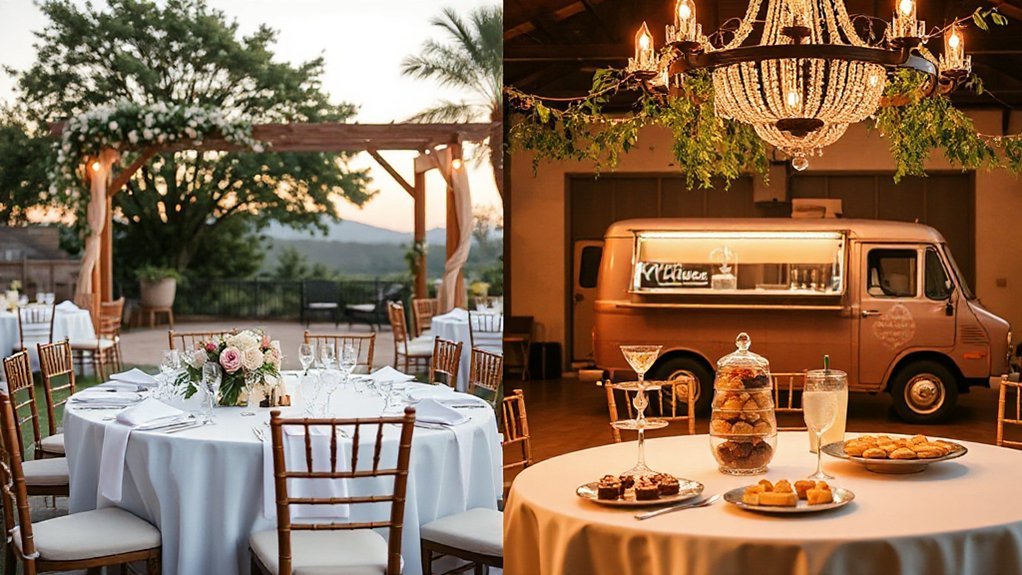
By coincidence, that “all-inclusive” venue you toured and your cable bill use the same magic trick: the base rate looks cute, the extras eat your lunch. You’ll get a room, basic chairs, lights, a bathroom that works—yay. Then come “premium” linens, corkage, service fees at 18–25%, overtime, the whole wallet-jenga. Want to spot the traps, keep the perks, and avoid surprise invoices? Start with what the base rate actually buys you—spoiler: less than you think.
Key Takeaways
- Base rate typically includes venue control 4–10 hours, main hall, prep room, bathrooms, manager oversight, basic tables/chairs, standard lighting, power, parking.
- Confirm inclusions in writing: setup/teardown, staffing, control of sound/lights/thermostat, vendor rules, insurance, cleanup buffer, kids and vendor meal policies.
- Common extras: premium catering, tastings, late-night snacks, premium bar spirits, corkage, specialty rentals, delivery, samples, size swaps, stain fees.
- Expect service charge 18–25% plus taxes; gratuities may be separate or mandatory—clarify which staff positions are covered.
- Overtime and buyouts cost more; peak Saturdays spike rates—standardize headcount, hours, and overtime per half-hour for apples-to-apples comparisons.
What the Base Rate Typically Covers

Usually, the base rate buys you the room and the clock—four to ten hours of “we own this box,” walls included, weather not. You’re paying for space, time, and the right to boss around chairs. Expect the main hall, a prep room, bathrooms that mostly behave, and a manager who appears like a sitcom neighbor, solving small fires with a clipboard. Basic tables and house chairs? Usually. Standard lighting and power that won’t fry your DJ? Yes, that. Parking access, if the lot exists, often folded in, with a map that lies. Insurance coverage requirements are baked in too, so you’re protected, and they’re protected, and nobody cries later. Cleanup buffer, a smidge. Security presence, light-touch. The venue opens, you throw magic. All yours.
Common Extras and Add-Ons to Expect
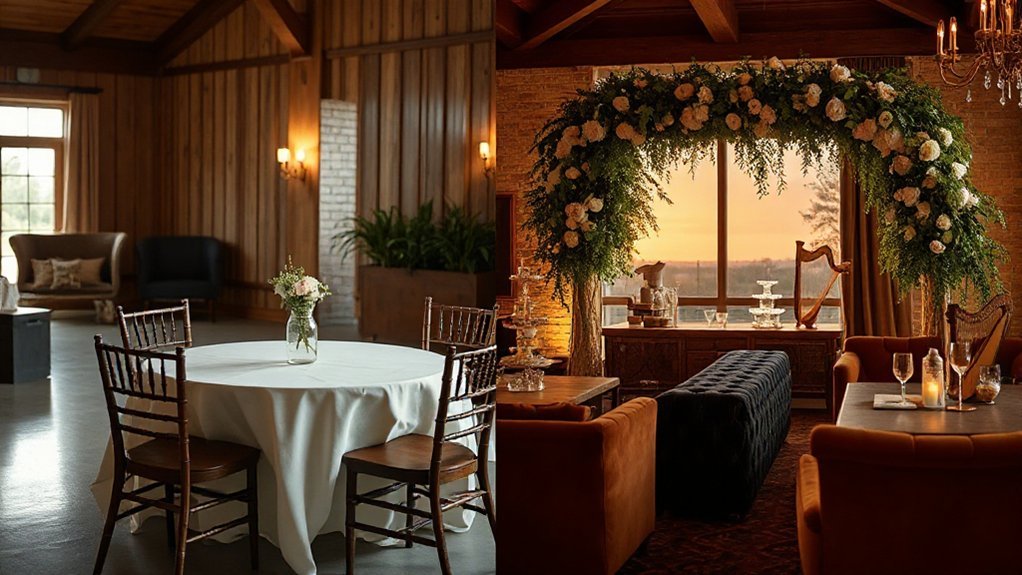
Now for the nickel-and-dime parade: you’ll get tempted by catering upgrades, then smacked with corkage because Aunt Linda insists on “her” Pinot. You’ll also pay for rentals—chairs that don’t wobble, linens that aren’t shiny, the whole pretty picture. And yes, there’s overtime, plus setup and breakdown fees, because time is money and your fairy-tale needs a payroll.
Catering Upgrades and Corkage
While the base menu looks fine on paper, the real bill shows up in the upgrades—the fancy stuff you’ll swear you don’t need until you see the truffle mac and cheese. You’ll want Signature Cocktails, obviously, because Aunt Linda drinks only lavender gin now. Add late-night snacks, beefier entrees, vegan swaps, all billed per head. Tastings? Sometimes extra, sometimes a shakedown. Now booze: ask about Corkage Limits, per-bottle fees, and staff service charges hiding behind smiles. Bringing your own bubbly can save money, then whack you on glassware, chilling, and pour fees. Negotiate bundles, cap the open bar, and pick two splurges. Not twelve.
| Upgrade | Typical fee |
|---|---|
| Premium bar spirits | $7–$15 per guest |
| Late-night slider station | $8–$12 per guest |
Track waste, protect your tab.
Rentals: Chairs, Linens
How did chairs and tablecloths become a second mortgage? You ask for somewhere to sit and something to cover plywood, and boom, line-item drama. Basic folding chairs might be included, but the cute chair silhouettes you pinned? Extra. Chiavaris, cross-backs, ghost chairs—each has a fee, plus cushions, because apparently sitting costs. Linens play the same game. The venue’s poly is free-ish, but you want soft fabric textures, rich color, proper drape? Cue upgrades: specialty rounds, runners, napkins, even chair sashes, all priced like boutique scarves. Delivery and swapping sizes add more. Ask exactly what’s included per table: cloth length, shape, backup counts, stains policy. Get samples, touch them, compare quotes. Then decide where style matters, and where your budget sits. Comfort still counts, too.
Overtime, Setup, Breakdown
You picked your cute chairs and buttery linens, great, but the clock is the real shakedown. Venues love a timeline, then invoice you for breathing past it. Overtime runs in 30–60 minute blocks, priced like boutique oxygen. Setup? You’ll pay if crews touch a fork before the contract window. Breakdown? Same circus, new fees, and a broom that has a day rate. Ask who moves décor, who folds chairs, who gets yelled at when Uncle Pete lingers.
- Confirm load-in hours, plus who supervises vendors.
- Pin down Traffic Coordination for buses, rideshares, and that one cousin with a trailer.
- Review Emergency Protocols, including exits and power loss.
- Clarify sweep, mop, trash haul, and penalties for glitter.
Put it in writing, please.
Service Charges, Taxes, and Gratuities Explained
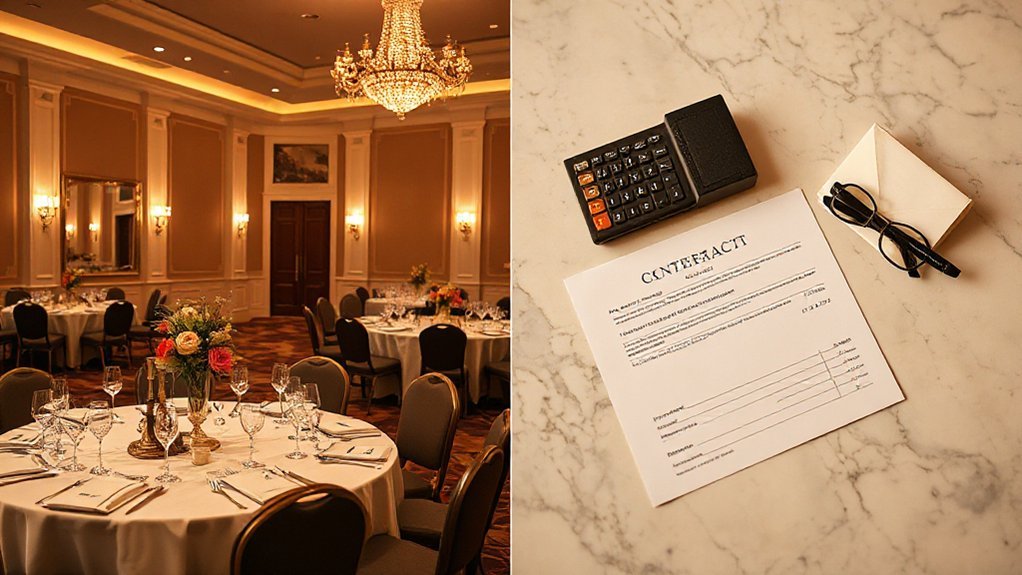
Before you sign anything, let’s decode the fine print—service charges, taxes, and gratuities, the uninvited guests at every wedding bill. The “service charge” isn’t a tip. It’s a house fee, usually 18–25%, funding admin, insurance, setup crews, and boring but real Payroll allocations. You don’t control it, you do pay it. Taxes stack next, applied to food, booze, rentals, even the service charge in some states. Ask what’s taxable, and at what rate, before your heart rate spikes. Gratuities are different. They’re for humans who lift, pour, and save your cake from a toddler. Sometimes mandated, sometimes optional. Clarify who’s covered—servers, bartenders, captains, coat check. Then layer Cultural expectations: your family might expect envelopes, or a thank‑you spread. Budget accordingly, breathe later. You will.
Peak Dates, Seasonal Pricing, and Buyouts

Fees sorted? Good, now face the calendar, the real boss. Peak dates—Saturdays in May, June, September—cost more, because everyone wants golden light and smug photos. Off-season? Cheaper, but maybe windy, maybe cozy; check weather trends, not your optimism. Local festivals can spike prices too; your “quiet” barn might sit next to a chili cook-off with tubas.
Buyouts sound fancy. They are. You’re paying to keep strangers, and their elbows, out. Sometimes it’s worth it for control, noise, and late-night dance chaos.
- Ask for a rate grid, month by month, weekday vs. weekend.
- Map local festivals within 10 miles, then avoid or embrace.
- Compare buyout fee vs. per-guest minimums.
- Hold a weekday rehearsal dinner to cultivate goodwill with vendors and staff.
Decoding Contracts and Fine Print

Ever notice how a venue contract looks friendly until the fine print pulls a ski mask? You skim, nod, then boom—pages of legal terminology that could bench-press a judge. Read it slow. Circle fees tied to setup windows, chair counts, generator hookups, overtime minutes. Ask how “service charge” differs from gratuity, because your wallet cares. Watch cancellation timelines; day 91 can cost triple day 92. Capacity rules? Fire code isn’t a suggestion. Liability clauses matter—those indemnity provisions can make you pay for Uncle Lou’s dance-floor karate. Require itemized add-ons in writing, not “we’ll figure it out.” Confirm load-in hours, vendor access, power limits, rain plan. Initial every change. Then, sleep on it. Contracts hate daylight, you don’t. Your future self will send thank-you cookies.
Comparing Quotes Apples-to-Apples
You can’t compare quotes if one includes chairs, candles, and your sanity, and the other charges extra for oxygen—so build a standardized inclusions checklist, then force every venue to fill it out. Match headcounts and hours, too; 120 guests for six hours is not the same beast as 150 for five, no matter how cute the bar menu looks. Do this, and suddenly the “cheap” place stops being cheap, and the “pricey” one stops being the villain—funny how math ruins fantasies, right?
Standardize Inclusions Checklist
Before you start juggling numbers like a stressed circus clown, make every venue play by the same checklist. Use Checklist templates you control, not whatever glittery brochure they wave. Define what “included” means, line by line, then run Audit protocols so no sneaky line items slip past. Chairs, linens, setup, teardown, insurance—either it’s in, or it’s a fee. Ask for proof, not vibes. If a manager hedges, highlight it, smile, and write “extra.” You’re the referee, whistle ready.
- Venue rental scope: rooms, outdoor spaces, backup plan.
- Furnishings: tables, chairs, linens, place settings, delivery.
- Service basics: setup, teardown, cleaning, staffing provided.
- Vendor rules: catering minimums, bar policies, cake cutting, corkage.
Then compare totals without flinching, and watch the pretenders melt under the spotlight you set.
Match Headcounts and Hours
While the brochures sparkle, the math hides in headcount and hours. You can’t compare quotes until you match bodies and clock time. Ask each venue to price the same guest count, same timeline: setup, ceremony, cocktails, dinner, dance, teardown. Note overtime rates per half hour, not “we’ll see.” Lock vendor meals and kids into the headcount rules.
Check Comfort Ratios: guests per restroom, bartender, and square foot. If the ratio’s stingy, you’ll pay for extra staff, or suffer long lines and mutiny. Watch Traffic Patterns, too. One bar in a hallway? Budget another. Same with coat check and parking.
Confirm what resets with more hours: rent, AV, security, HVAC, cleaning. Then compare per-person totals and true end time. Apples. To apples. For real, please.
Questions to Ask Before You Book
How do you keep a dream venue from turning into a budget horror flick? You ask sharp questions, before you sign anything. What’s actually included—tables, chairs, setup, teardown, staff? Who controls the sound, the lights, the thermostat, you or some phantom manager? Confirm Accessibility accommodations, not just ramps, but restrooms, parking, and elevators that work after 10 p.m. Ask about Emergency protocols—storms, blackouts, a guest who faints on the dance floor.
- What’s the real timeline: load-in, ceremony, flip, last song, lights up?
- What vendors are allowed, and what fees pop up if you bring your own?
- What’s the backup space if it rains sideways, or snows in April?
- What’s the alcohol policy, security plan, and who handles messy surprises? Honestly.
Negotiation Tips and Cost-Saving Strategies
Because venues price like airlines, you need a plan to haggle without turning into That Couple. Start with leverage, not vibes: weekday or off-season dates, smaller minimums, flexibility on layout. Ask for value, not just cheaper—upgrade chairs, extend bar, waive cake-cutting. Vendor Bundling helps; if you take their caterer and DJ, push for a package credit. Flash competitor quotes, politely, then smile and ask, “What can you do?” Also hunt Local Discounts—city residents, teachers, military, even alumni. Offer fast deposit, fewer holds, earlier load-in. Trade, don’t whine. If price won’t move, cap service fees, corkage, and overtime. Get it in writing, every last spoon. And if the vibe screams surcharge factory? Thank them, ghost kindly, book the charming barn down the road. This works.
Conclusion
Wrap it up: you know the base buys the room, chairs, lights; the extras nibble ankles—linens, corkage, overtime, that 22% “service” gremlin. Funny coincidence, every bargain blooms fees by sunset. So you ask hard questions, match guest counts, timelines, apples to apples. You get concessions in writing, you confirm security, vendors, taxes. Then you negotiate, smile-shark combo, and walk if needed. Because it’s your party, not their ATM. You now know what you’re paying for.






Leave a Comment